


Poultry News
  • Production
    • Broiler Production
    • Ducks
    • Egg Production
    • Game
    • Hatching
    • Housing
    • Turkeys
  • Processing
  • Business & Politics
    • Business
    • Economics
    • EU & Politics
    • Marketing
    • People
    • Training & Education
  • Welfare
    • Environment
    • Food Safety
    • Vet & Medication
    • Welfare
  • Feed
  • Genetics
  • New Products
  • Magazines
    • June 2026
    • 2026 Innovation Supplement
    • 2026 British Pig & Poultry Fair guide
    • May 2026
    • March 2026
    • 2026 Feed & Nutrition supplement
    • February 2026
    • January 2026
    • December 2025
    • November 2025
    • October 2025
    • September 2025
    • 2025 Buildings supplement
    • August 2025
    • 2025 Poultry Health supplement
    • July 2025
    • 2025 National Egg and Poultry Awards finalists supplement
    • June 2025
    • 2025 Innovation supplement
    • May 2025
    • April 2025
    • March 2025
    • 2025 Feed and Nutrition supplement
    • February 2025
    • January 2025
    • December 2024
    • November 2024
    • October 2024
    • September 2024
    • 2024 Building for the Future supplement
    • August 2024
    • 2024 Poultry Health supplement
    • July 2024
    • 2024 National Egg and Poultry Awards finalists supplement
    • June 2024
    • 2024 Innovation supplement
    • Pig & Poultry Fair 2024
    • May 2024
    • April 2024
    • March 2024
    • February 2024
    • January 2024
    • December 2023
    • November 2023
    • Processing Equipment Supplement – Nov 2023
    • October 2023
    • Building Supplement – Sept 2023
    • September 2023
  • Jobs
    • Browse Jobs
    • Post a Job
    • Manage Jobs
  • Events
    • National Egg and Poultry Awards
    • Poultry Fair
    • Webinars
Twitter LinkedIn
  • FREE Email Newsletters
  • About Us
  • Advertise
  • Subscribe
  • Contact Us
Twitter LinkedIn
Podcast
Poultry News
  • Production
    • Broiler Production
    • Ducks
    • Egg Production
    • Game
    • Hatching
    • Housing
    • Turkeys
  • Processing
  • Business & Politics
    • Business
    • Economics
    • EU & Politics
    • Marketing
    • People
    • Training & Education
  • Welfare
    • Environment
    • Food Safety
    • Vet & Medication
    • Welfare
  • Feed
  • Genetics
  • New Products
  • Magazines
    1. June 2026
    2. 2026 Innovation Supplement
    3. 2026 British Pig & Poultry Fair guide
    4. May 2026
    5. March 2026
    6. 2026 Feed & Nutrition supplement
    7. February 2026
    8. January 2026
    9. December 2025
    10. November 2025
    11. October 2025
    12. September 2025
    13. 2025 Buildings supplement
    14. August 2025
    15. 2025 Poultry Health supplement
    16. July 2025
    17. 2025 National Egg and Poultry Awards finalists supplement
    18. June 2025
    19. 2025 Innovation supplement
    20. May 2025
    21. April 2025
    22. March 2025
    23. 2025 Feed and Nutrition supplement
    24. February 2025
    25. January 2025
    26. December 2024
    27. November 2024
    28. October 2024
    29. September 2024
    30. 2024 Building for the Future supplement
    31. August 2024
    32. 2024 Poultry Health supplement
    33. July 2024
    34. 2024 National Egg and Poultry Awards finalists supplement
    35. June 2024
    36. 2024 Innovation supplement
    37. Pig & Poultry Fair 2024
    38. May 2024
    39. April 2024
    40. March 2024
    41. February 2024
    42. January 2024
    43. December 2023
    44. November 2023
    45. Processing Equipment Supplement – Nov 2023
    46. October 2023
    47. Building Supplement – Sept 2023
    48. September 2023
    Featured

    Poultry Business – June 2026 issue out now

    By Chloe RyanJune 8, 2026
    Recent

    Poultry Business – June 2026 issue out now

    June 8, 2026

    2026 Innovation Supplement out now

    June 8, 2026

    2026 British Pig & Poultry Fair guide out now

    May 13, 2026
  • Jobs
    • Browse Jobs
    • Post a Job
    • Manage Jobs
  • Events
    • National Egg and Poultry Awards
    • Poultry Fair
    • Webinars
Twitter LinkedIn
Poultry News
Production

Technical advice: giving chicks the right start

Chloe RyanBy Chloe RyanAugust 11, 20224 Mins Read
Facebook Twitter LinkedIn Email
Share
Facebook Twitter LinkedIn Email

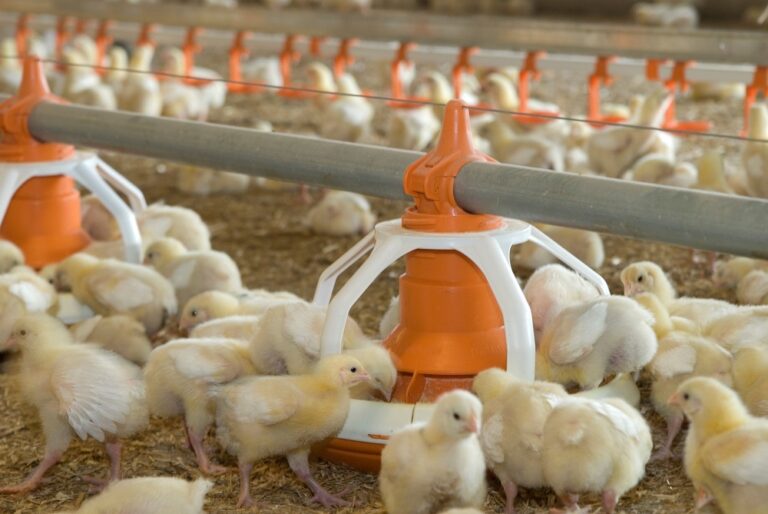
Tight margins and ever-rising feed prices make it more important than ever to ensure birds get off to the best start in life

With a relatively short life cycle, supporting broiler chick health from day one should be a key consideration for any poultry producer. John Underwood, senior national account manager for poultry at MSD Animal Health UK, says poor flock health, often caused through poor biosecurity or disease pressure, can have a negative impact on
overall performance and profitability.

“Busy, warm poultry houses provide optimal environments for the transmission of disease and infection, which can wreak havoc on an enterprise’s economics,” he explains. “Therefore, focusing on good biosecurity and implementing a robust disease-prevention programme can pay dividends in the long run, which in the current climate is crucial for poultry producers to maximise profit potential.”

Quite often, when biosecurity is mentioned, we think about implementing practices once the birds have arrived, Underwood points out. But actually, the end of the last flock is the start of the next when it comes to managing and monitoring future crop performance.

“Although biosecurity is crucial throughout the life cycle of the bird to maximise profitability and bird potential,
the cleanout and disinfection process prior to birds entering the sheds is just as important.

“Removing the litter from sheds, completing a deep clean and a robust disinfection programme, then allowing the floors to dry before adding fresh shavings are all measures which, if not carried out correctly, can instigate potential problems for the next crop.”

In recent years, producers have experienced extremely tight turnarounds when moving birds off the farm and bringing new chicks in. But it’s important this shorter window doesn’t compromise a thorough cleanout. Where possible, Underwood suggests removing birds and the litter prior to the washing and disinfection process taking place to reduce the risk of a biosecurity breach.

“Keeping shed doors shut and making sure all vehicles and personnel use wheel and foot dips thoroughly before entering the now clean sheds, are examples of measures producers can adopt to keep biosecurity tight on farm,” he adds.

Once the turnaround period is complete, the next consideration for producers is new chicks being brought on farm. To ensure optimum chick performance, it is important disease-prevention methods are considered from as early as when they are in the hatchery. “Chicks are born with a small degree of immunity derived from their mothers which diminishes over time, leaving birds vulnerable to disease and infection. Disease-prevention tools, such as vaccination, can be given to chicks at the hatchery and on-farm to help build their immunity,” Underwood continues.

“Vaccinations administered at the hatchery offer a number of benefits to both flocks and workers when compared to on-farm vaccinations.

Hatchery vaccinations can be given in ovo and to day-old chicks, offering the ability to boost immunity against disease from the outset. They also make it much easier to guarantee you have vaccinated every bird which, when given on farm, can sometimes be a challenge. In addition to this, automated vaccination systems in a hatchery are less labour intensive, which is particularly useful in this day and age where labour supply is an issue for the sector. Likewise, when it comes to bird welfare, hatchery vaccines will typically incur less stress.”

Underwood concludes by emphasising the importance of making vaccine application as easy as possible. “Reducing stress on birds contributes to their overall health and welfare as well as reducing their vulnerability to common disease challenges. Hatchery vaccinations provide a mass population of birds with protection against diseases at the earliest possible interval, reducing their chances of contracting diseases and infections as they move through their life.”

Share. Facebook Twitter LinkedIn Email
Previous ArticleCall to ban release of gamebirds in UK countryside to prevent avian flu
Next Article The potential of beans in poultry diets
Chloe Ryan

Editor of Poultry Business, Chloe has spent the past decade writing about the food industry from farming, through manufacturing, retail and foodservice. When not working, dog walking and reading biographies are her favourite hobbies.

Read Similar Stories

Production

Hatching a plan for turkey

June 12, 202611 Mins Read
Production

Trouw conference discusses sustainability

June 11, 20264 Mins Read
Broiler Production

UK poultry production surpasses 170,000 tonnes in April

June 5, 20262 Mins Read
Latest News

Stephen Morgan handed farming brief in Defra reshuffle

June 15, 2026

Comment: Protein prices are spiking everywhere

June 15, 2026

Comment: When the industry doesn’t tell its own story, someone else will

June 12, 2026
Sponsored Content

Take Control of Your Farm’s Biosecurity with Livetec

May 1, 2026

Address beta-mannans in broiler diets to optimise bird health and performance

April 1, 2026
© 2024 MA Agriculture Ltd, a Mark Allen Group company

Privacy Policy | Cookies Policy | Terms & Conditions

  • Farmers Weekly
  • AA Farmer
  • Farm Contractor
  • Pig World

Type above and press Enter to search. Press Esc to cancel.