


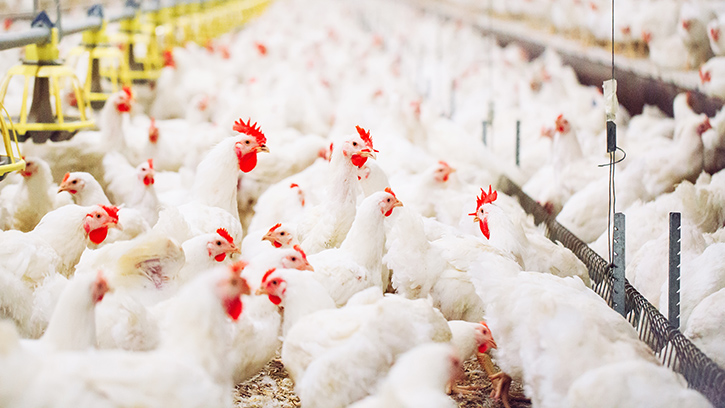
As another spell of exceptionally hot weather grips much of the UK, the poultry industry is being forced to confront a big question: how does a sector built around tightly controlled environments adapt to a climate that is no longer behaving predictably?
While there are currently no official figures quantifying the impact of this summer’s heatwaves on UK poultry production, producers and processors have spent weeks battling soaring temperatures that have tested ventilation systems, driven up electricity consumption and placed birds under sustained heat stress.
Several industry sources have told Poultry Business they have experienced higher-than-normal mortality during the hottest periods this summer. However, those reports remain anecdotal and no national assessment has yet been published by government or industry bodies, making it impossible to quantify the overall impact across the UK.
Across continental Europe, however, the consequences have been far easier to measure.
In France, the country’s egg industry estimates that between 500,000 and 700,000 laying hens – around 1-1.5% of the national flock – died during the late June heatwave. Industry leaders said more laying hens were lost during the heat event than to avian influenza during the entire 2025/26 season, with the resulting reduction in production expected to affect egg supplies for several months.
The broiler sector was hit even harder. French poultry organisations estimate that between 2.5 million and 3 million broilers died during the same period, particularly in Brittany, the country’s main poultry-producing region. The scale of losses reportedly overwhelmed rendering capacity in some areas and required emergency arrangements for carcass disposal.
The wider impact has affected the whole farming industry. The European Commission’s Joint Research Centre recently warned that repeated heatwaves across western Europe have accelerated crop development, depleted soil moisture and reduced yield forecasts for cereals, maize and sunflower crops. Lower grain production could add further pressure to feed costs later this year, creating another challenge for livestock producers.
Although the UK has not experienced losses on the same scale, the events in France have reinforced concerns that periods of extreme heat are becoming a significant commercial and welfare risk for poultry businesses across north-west Europe.
Even where mortality remains relatively limited, the financial consequences of heat stress can be substantial.
Modern poultry houses rely heavily on mechanical ventilation to maintain stable environmental conditions. During prolonged periods of hot weather, tunnel ventilation systems, circulation fans and evaporative cooling equipment may operate almost continuously, significantly increasing electricity consumption. Processing plants also face higher refrigeration loads to maintain food safety standards during periods of elevated ambient temperatures.
The biological effects are equally significant. According to the UN’s Food and Agriculture Organisation (FAO), heat-stressed birds typically reduce feed intake in an attempt to lower metabolic heat production. For broiler producers this can mean slower growth rates, poorer feed conversion and birds taking longer to reach target weights. Layer flocks may experience reductions in egg production, alongside lighter eggs and poorer shell quality. Birds also consume substantially more water as they attempt to regulate their body temperature.
Heat also presents challenges beyond the farm gate. Research highlighted by the Energy & Climate Intelligence Unit found that during the UK’s 2022 heatwave around 18,500 chickens died from heat stress during transport to slaughter, illustrating how vulnerable supply chains become when temperatures climb beyond historical norms.
The UK has experienced increasingly frequent periods of extreme summer temperatures in recent years, while projections suggest heatwaves will become both more common and more intense.
What is already clear, however, is that this summer has highlighted the growing importance of heat resilience. Whether through investment in more powerful ventilation, improved transport systems or building designs better suited to higher temperatures, adapting to hotter summers is rapidly becoming a business necessity.