



As Livetec Systems celebrates 15 years in business, the company tells Michael Barker how innovation is at the heart of everything it does
From Steve Jobs to Henry Ford and Woody Allen, there are countless pithy soundbites about innovation. The common theme is this: if you don’t take risks, you don’t move forward, and the world stagnates.
In poultry, that’s as valid as in every other industry, and it’s a mantra that rings particularly true at Livetec Systems, the Bedfordshire-based UK company that was founded in 2010 with the aim of helping livestock businesses better manage disease risk, protect animal welfare and improve preparedness. Livetec picked up the Innovation of the Year gong at the 2025 National Egg & Poultry Awards for its digital platform Livestock Protect, and is continually looking to take its technological offer to the next level.
Originally known for its specialist handling, welfare and emergency response services – particularly within the poultry sector – Livetec has evolved significantly over the past 15 years. Today, the company supports poultry and pig producers with biosecurity, contingency planning, disease prevention, training and digital tools. “From the beginning, the aim was to bridge the gap between scientific research and practical on-farm implementation, giving producers evidence-based, workable solutions that improve resilience and protect livelihoods,” explains director Neal Samet. “While the company’s roots are in emergency response, the focus today is much broader: helping businesses prevent, protect, plan and predict so risks can be managed before problems escalate.”

Livetec currently employs around 70 people across operations, advisory, training, technology, product development, customer support and emergency response, and it offers a range of services to poultry businesses, supporting everyone from backyard bird keepers through to large-scale integrated producers. Its offer spans biosecurity advice and risk assessments, disease preparedness and contingency planning, and emergency response, as well as digital tools for biosecurity management and traceability, visitor management and movement tracking, training and eLearning, and a range of other guidance and consultancy services.
“We increasingly position ourselves as a year-round partner to the poultry industry – not just there in a crisis, but helping producers predict, plan, prepare and prevent risks every day, and turning good biosecurity into consistent daily habits across their business,” says Samet.
The company says innovation is “driven by real-world problems”, with most ideas for new products and services coming directly from customers, advisors, field teams and industry conversations, as well as from what Livetec’s own staff see through applied research and on-farm delivery. “Because our teams spend so much time on farms and working with producers during both routine operations and outbreaks, we are constantly seeing where there are gaps, frustrations or opportunities to improve the way things are done,” Samet says.
Ideas are then tested with customers, shaped by practical feedback and developed collaboratively between the advisory, technology and operational teams. “We focus on innovation that solves a genuine problem, is easy to adopt and has a clear benefit in terms of time, compliance, welfare, traceability or disease prevention. That is why many of our innovations combine practical on-farm support with digital tools, rather than relying on technology alone.”
Livestock Protect
That brings the conversation around to Livestock Protect, a solution that was developed because Livetec could see that many producers were still relying on paper records, spreadsheets and disconnected systems to manage critical biosecurity and farm information. During outbreaks and disease investigations, it became clear how difficult it could be to quickly access movement records, outbreak zone information, emergency plans or visitor logs when time really mattered.

“We wanted to create a single platform that brought together disease alerts, traceability, planning and biosecurity management in one place,” explains product owner Dean Button. “Livestock Protect is really the evolution of everything we have learned over many years of supporting producers during outbreaks and high-pressure situations.”
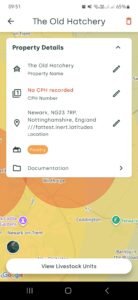
The platform’s wide-scale functionality includes a dizzying range of functions, including real-time outbreak alerts, automatic notifications when a farm enters a bird flu restriction zone, digital biosecurity scoring and vulnerability assessments, visitor and site access logging, and emergency response planning. It has automated reporting to support compliance, AI-supported guidance and decision-making, disease intelligence and risk monitoring, mobile app access, and faster traceability when restrictions lift.
With so much to digest, there were naturally challenges bringing a platform of its depth to market, and Button says one of the biggest was encouraging adoption in an industry where time is limited and some people are cautious about digital tools. He says that made it extra important that the platform was practical, easy to use and clearly demonstrated value from day one.
“Another challenge was making sure the platform worked for different audiences, from backyard keepers and individual farm managers through to large integrated businesses with multiple sites and more complex reporting needs,” Button says. “That flexibility remains important, with the platform and app designed to give users the level of information and functionality that suits their role and requirements.”
Considering it’s only been up and running since summer 2024, it’s impressive that Livestock Protect already has 1,800 registered users across 3,604 farms in the UK. Livetec started out working with five of the UK’s largest poultry and egg producers as part of a phased rollout, with a full market release taking place in 2025. The free mobile app version is also available to poultry keepers of all sizes through both the Apple and Google app stores.
So what’s the future for the platform? Button says the next phase is focused on making it even more predictive, connected and intelligent, while keeping it practical and easy to use for producers and advisors. That includes expanding AI-driven features, improving risk alerts and outbreak intelligence, bringing more mobile functionality into the app and enhancing reporting and data visualisation.
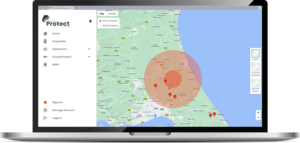
There is also a growing focus on developing stronger integration between site records, movement data and disease alerts, helping producers make quicker and more informed decisions. Beyond poultry, there is potential to adapt the platform for wider livestock sectors such as pig producers and veterinary professionals, as well as international markets.
Focus on innovation
The broad task of helping the UK poultry industry to the next level brings rich opportunities for technology. In addition to disease prediction and early warning systems, Samet believes there’s potential for smarter use of farm data and benchmarking to turn existing data into practical, comparable insights. Traceability – of people, vehicles and equipment – is another area ripe for growth, alongside more practical biosecurity tools, training and knowledge transfer, welfare monitoring and environmental sensors.
Retrofitting older poultry buildings with stronger, more effective biosecurity measures will also be important, he adds: “There is significant potential to make technology more accessible for producers by focusing on simple, practical tools that save time and reduce pressure, as well as helping businesses improve standards within existing buildings and systems, not just new ones.”
There’s no bigger talking point in technology right now than the ever-increasing role of artificial intelligence, and Samet believes it has strong potential in poultry, particularly in helping producers identify patterns, detect risks earlier and make faster decisions.
“However, we do not see AI replacing people,” he stresses. “The real opportunity is in using AI to support human expertise rather than remove it. For example, AI can help analyse outbreak trends, monitor movements, flag biosecurity risks and provide faster access to relevant guidance, but experienced farm managers, advisors and veterinarians remain essential in interpreting that information and making the final decision.
“The focus should be on turning complex data into clear, actionable outputs that support decision-making at the point of need. The most effective AI tools will be those that are practical, transparent and genuinely useful in day-to-day operations, rather than adding unnecessary complexity.”
The road ahead
As Livetec celebrates its 15th birthday this year, the company is preparing to reveal an updated brand identity at the Pig & Poultry Fair, reflecting how the business has evolved from its emergency response roots into a broader livestock protection and technology company. “More broadly, our focus is on continuing to help producers, vets and industry partners move from risk awareness to practical action, through a combination of advice, training, technology and on-farm support,” says Samet.
That refresh will sit alongside continued investment in Livestock Protect and the development of the company’s accredited training offering through the launch of an eLearning platform.
In other words, there will be no let up in the focus on innovation, and from a company that has shown a constant willingness to find new solutions in its decade and a half so far, one should expect nothing less.