

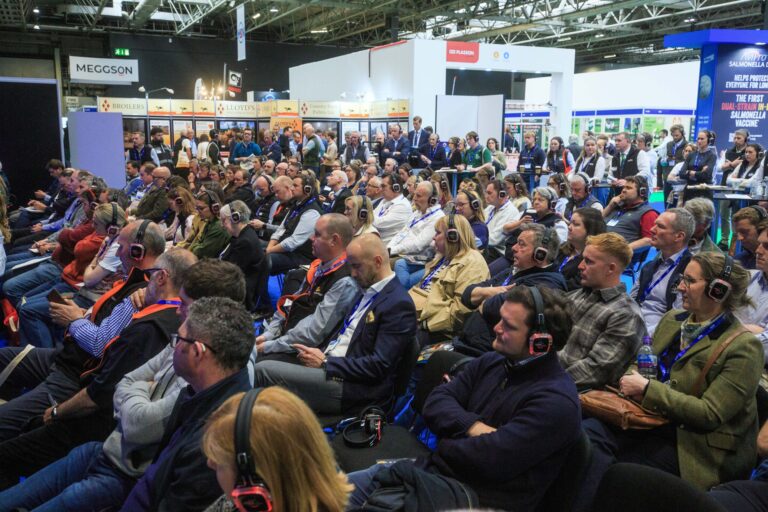
The mood at the poultrymeat outlook forum at the British Pig & Poultry Fair last week was unmistakably optimistic. While the UK poultry sector continues to face significant challenges, from planning barriers and labour pressures to avian influenza and import competition, the message from across the panel was clear: demand for British poultry is strong, the long-term outlook is positive, and the industry has every reason to be confident if it can unlock the barriers to growth.
Representing different parts of the sector, David Nielsen of Avara Foods, chicken producer Sam Drummond, and Mark Gorton of Traditional Norfolk Poultry provided perspectives spanning conventional broiler production and premium free-range and organic markets.
Consumer demand
One of the most encouraging themes was the continued growth in poultry consumption across all market segments.
For Mark Gorton, whose business supplies premium free-range and organic chickens and turkeys to major retailers, demand has remained remarkably resilient, even in a challenging economic climate.
Despite premium price points, organic chickens retailing around £20 and Christmas turkeys reaching £150 or more, sales continue to grow.
“People still want to treat themselves,” Gorton noted. “Even in tougher times, they want the best product for special occasions.”
David Nielsen highlighted forecasts showing UK chicken consumption growing by 5–6% annually over the next five years, with retail demand now exceeding even the elevated levels seen during the COVID lockdowns.
Chicken remains one of the most affordable, efficient, and accessible proteins available to British consumers.
“We can convert grain into high-quality protein relatively cheaply,” Nielsen said. “That makes poultry absolutely central to UK food security.”
Planning permission
If demand is not the problem, capacity increasingly is. Across the panel, planning permission emerged as the single greatest obstacle to sector growth.
Sam Drummond described the challenge bluntly: poultry businesses want to invest, but the ability to expand is constrained.
“It takes years to get planning permission for a broiler site now, and that’s if you’re lucky.”
For many producers, the focus has shifted from expansion to reinvestment. With the average broiler house now estimated to be around 35 years old, maintaining and upgrading existing infrastructure has become essential.
“We’ve got to look after the sheds we have,” Nielsen said. “We don’t know when the next new ones are coming.”
Building costs have also surged, with new poultry houses costing roughly double what they did before COVID. That makes long-term contracts and retailer confidence critical to supporting investment decisions.
Labour pressures easing
Labour shortages, especially post-Brexit, have been a major challenge in recent years. However, panel members reported that the situation has stabilised considerably.
Traditional Norfolk Poultry now sees around 80% return rates among seasonal workers, particularly through poultry visa schemes that bring in experienced workers from Romania and Bulgaria during the Christmas peak.
But there was a wider concern: the lack of dedicated poultry education. “There isn’t a specific poultry training course,” Gorton said. “You can study agriculture, but where do young people go to learn poultry?”
The industry’s future workforce, panellists argued, depends on better apprenticeship pathways and stronger links with agricultural colleges.
New markets
Another major opportunity lies in expanding British poultry’s presence in foodservice, schools, and hospitals.
While supermarkets increasingly prioritise UK-sourced poultry, panellists expressed frustration that public procurement often relies on imported chicken. The panel argued there is a major opportunity to supply British-grown secondary cuts such as wings and drumsticks into institutional catering.
“We’ve got perfectly good British product,” Gorton said. “Why are we importing chicken when we can supply it ourselves?”
Avian influenza
Avian influenza remains one of the sector’s greatest risks, particularly for turkey producers. However, there was cautious optimism around vaccination.
Traditional Norfolk Poultry is currently hosting the UK’s first avian influenza vaccination trial in commercial turkeys. The results, expected later this year, are being closely watched internationally.
A confident future
As Nielsen concluded, the industry must stop being distracted by minority criticism and focus on its strengths.
“We should be proud of what we do. We’ve got a fantastic product, and people want more of it.” The challenge now is making sure the industry can grow fast enough to meet it.