


Pests carry an ongoing threat to both animals and humans on farms, and keeping them out requires a well-planned holistic approach. Michael Barker reports
There are many pieces that make up the jigsaw of successful poultry farming, but one of the least glamourous has to be the continual battle to keep pests at bay.
Tackling pests has become a year-round obsession for farms, with changing weather patterns affecting insect numbers in particular. Warmer summers and milder winters are perfect for pests to thrive in, and population growth has brought more pests as people create food sources and environments that many insects and rodents want and need in order to thrive.
The Covid pandemic even had an impact on pest sightings, due to Brits’ changing behaviours and lower availability of food waste in public areas. Add to that the cost-of-living crisis, which has seen more people attempting DIY methods of control – a situation that is ironically leading to increased pest populations – and you have a dangerous cocktail of threats.
That all means there’s much to consider when it comes to pest control and its role within overall poultry biosecurity. As Natalie Bungay, head of technical at the British Pest Control Association (BPCA), stresses, all farming businesses require protection from pests, but in a largely unregulated market, farmers can fall foul of untrained operators or worse, jeopardise their own health or that of their livestock. Being proactive and preventing infestations before they take root is therefore always preferable: “Regular inspections by a trained and competent contractor are the best way to ensure you don’t have any infestations slowly getting out of control undetected,” Bungay says. “They will provide a proactive pest management programme to reduce the risk of infestations and keep pests in check.”
Jonathan Waugh, marketing manager at Pelgar, describes pest control as a fundamental component of poultry biosecurity, noting that even the best vaccination, cleaning and management programmes can be undermined if rodents, flies and other pests are able to move freely around a site.
“Pests can act as mechanical vectors, carrying pathogens on their bodies and contaminating feed, water lines, equipment and housing,” he says. “They can also move between poultry sheds, neighbouring farms and waste areas, increasing the risk of disease introduction and spread. Effective pest management therefore forms an important first line of defence for both broiler and egg producers.”
For Elanco Animal Health, pest control is closely linked to pre-harvest food safety, particularly given the fact that insects and rodents are well-documented vectors for pathogens that are relevant to animal and human health. Work conducted by Elanco has shown, for example, that darkling beetles can carry the same salmonella strains as those identified in processing plants. Flies and rodents are also associated with the spread of salmonella, E. coli, campylobacter and avian influenza.
Heightened pest activity can amplify pathogen loads and increase contamination risk through movement across surfaces, contact with feed and water systems, and ingestion by birds, introducing pathogens directly into the flock, Elanco says. Even if individual pests carry low pathogen loads, large populations, often numbering in the millions, can significantly elevate the microbial load on poultry, leading to contamination that follows birds through post-harvest.
Rodents head list of threats
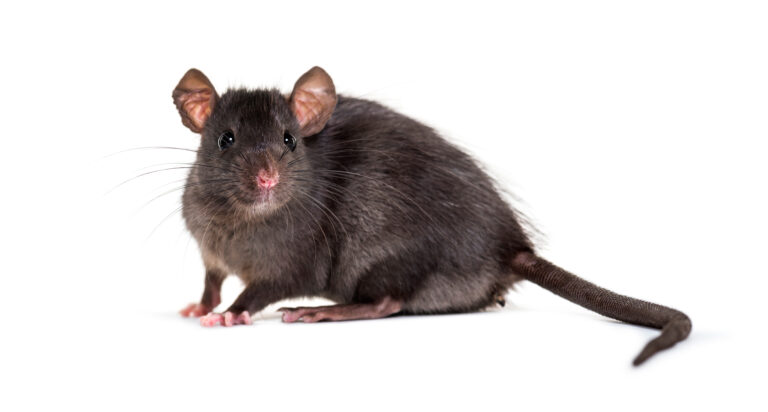
Modern poultry operations face a number of pest threats, but according to Waugh, rodents remain the most significant and persistent, with rats and mice attracted to readily available feed, warmth and shelter. Once established, rodent populations can increase rapidly.
Flies are another major concern, he adds, especially during warmer periods and where manure management presents favourable breeding conditions. High fly populations can impact bird welfare, create nuisance issues for neighbouring communities and contribute to disease transmission risks.
Wild birds should not be overlooked either, Waugh notes. They can gain access to feed stores and poultry buildings and may introduce pathogens from external environments.
“As we move into autumn and winter, rodent pressure typically increases as rats and mice seek food and shelter indoors,” he says. “This seasonal shift means poultry producers should be particularly vigilant heading into the colder months.”
The BPCA rates the top-three pest threats as rodents, foxes and red poultry mites, with the latter causing stress to chickens, especially if they are present in large numbers. That can lead to weakness, an increased susceptibility to disease and, crucially, stressed birds that tend to lay fewer eggs. “The greatest risk with poultry mites is people trying to manage an infestation themselves,” Bungay warns. “That can be really dangerous. Many people think the best thing to do is give it a big dose of insecticide to overpower the mites, but it’s really a matter of carefully timed treatments with the appropriate products. Attempting to overpower the mites presents a risk of having dangerous insecticides ending up in the eggs.
“Dangerous levels of insecticides in the eggs can be a serious risk to people and that is a very real danger of attempting to treat a red poultry mite infestation by yourself. A secondary issue is that often, a DIY treatment with insecticide will appear to eradicate the infestation, but around 20% of the mites will actually be dormant and will become active again around six weeks later.
“There are a lot of misleading and inaccurate home remedies described online, but it really is important that people either choose to keep their chicken runs scrupulously clean – which can be a long hard battle – or seek professional advice if an infestation occurs.”
Integrated Pest Management
Pest experts all agree that for the modern poultry industry, good pest management should not be regarded as a standalone activity but as an essential part of a comprehensive farm biosecurity strategy. “Integrated Pest Management (IPM) provides the most sustainable and effective approach to poultry pest control because it focuses on prevention as well as treatment,” says Waugh.
Proofing measures help deny pests access to buildings by sealing gaps, repairing damaged cladding and ensuring doors and service entry points remain secure; good sanitation reduces the availability of food, water and harbourage that pests require to thrive; and regular monitoring enables producers to identify activity early before populations become established. Monitoring programmes can include bait stations, tracking points and routine inspections around poultry sheds, feed stores and perimeter areas.
Where pest activity is identified, targeted control measures can then be implemented using appropriate rodenticides, insecticides, traps or monitoring systems. By combining all these elements, Waugh says producers can achieve better long-term control while reducing the likelihood of recurring problems.
For Livetec Systems, pest control on poultry farms is about far more than protecting feed stocks, preventing building damage and minimising general mess. Rodents, wild birds and insects can all carry harmful pathogens, the company notes, creating routes for diseases to enter and spread around a farm. “Different pests create different risks in different areas of the farm, so understanding which one you are dealing with and where that activity is occurring is an important part of effective control,” explains Dr Paul Talling, biosecurity adviser at Livetec. “We have first-hand experience of dealing with the consequences of disease incursions and we know that pest activity is often implicated as a causative agent in disease outbreaks. Indeed, we’ve collected dead vermin from within infected poultry sheds which have been shown to be carrying the avian influenza virus. This demonstrates why pest control needs to be considered a preventative biosecurity measure, rather than something that is only addressed once an infestation becomes obvious.”
Talling says early identification is critical, and signs such as fresh droppings, fur or feathers, burrows or nests, gnaw marks, smear marks, footprints, tracks or damaged woodwork or wiring can indicate recent activity that needs to be investigated. Wild bird activity around feed stores, water sources or poultry housing can also present a significant contamination risk. The role of flies, beetles and mites should not be underestimated either, as their numbers can increase rapidly and can contribute to the spread and/or carryover of disease from one flock to another.
“Effective pest management should be proactive and continuous, combining meticulous cleaning and disinfection with effective proofing, good housekeeping and appropriate monitoring, trapping and, where necessary, responsible pesticide use,” Talling stresses. Feed stores, ancillary housing and waste areas should be kept tidy to reduce attractants, while high-risk areas, such as muck stores, should be monitored regularly.
Training and job competency are also important parts of effective pest control. Where pest management is carried out solely by farm staff, those responsible need to keep up to date with modern control strategies, new technologies and legislation and follow the relevant requirements for monitoring, trapping and pesticide use.
Tools to tackle the threat
Paul Westgate is owner and principal biologist at Veritas Pest Consultancy, and he strongly recommends that producers have a rotational use of pesticides and that they check helpful tools on both the Veritas and Rodenticide Resistance Action Committee (RRAC) websites. “That can be really helpful in terms of making sure that you’re not applying the wrong rodenticides, and also getting people switched on to not just continually use the blue stuff,” he says. “Instead think about actually changing the active ingredients around so that you don’t get poor resistance.”
Westgate says good record keeping is essential, showing where hotspots are and whether interventions are proving successful or not.
Experts stress that autumn is one of the most important times of year to review pest management programmes, with Waugh noting that a common scenario Pelgar encounters involves farms experiencing increased rodent activity around feed storage areas during the autumn and winter months.
He advises producers to inspect poultry houses and feed stores for gaps, damaged cladding and potential rodent entry points. They should remove excess vegetation and clutter around buildings that may provide harbourage, and check that feed storage areas remain secure and that spillages are cleaned up promptly.
Added to that, it’s important to review monitoring records and increase inspections where activity has been identified previously, ensure bait stations and monitoring points are correctly positioned and maintained, and work with a professional pest management partner where additional expertise is required.
New technologies are also giving farmers valuable additional tools in the fight against pests. BCPA’s Bungay believes fast-developing remote monitoring tech is particularly useful, as it brings together sensors and cameras, connected via a network, to alert unit managers of rodent activity on a particular site. The systems, working 365 days a year, allow for monitors to be placed in situations unsafe for technicians to routinely enter, enable faster responses to potential infestations, and offer data collection for clients to provide evidence of infestation and measurable outcomes. They are an increasingly useful part of IPM strategies.
Technology will no doubt continue to play a bigger role as new options come to market, and will take their place among that holistic pest management approach that is essential to success.
Rooting out the rats
According to the BPCA, rat control should be a priority for poultry farmers as winter sets in, as some rats will seek shelter indoors, with easy access to food and water sources, as the weather turns colder.
The presence of rats can be highly stressful to chickens, the association stresses, as rats will steal eggs and may attack the birds.
Five steps poultry businesses can take to discourage rats from moving into their premises are:
- Plug gaps, holes or crevices in exterior walls to prevent rats gaining access
- Check drain covers are fitted properly and disused pipes are sealed off
- Keep food storage bins tightly sealed to avoid offering an easy meal
- Dispose of waste carefully and ensure bin lids are firmly closed
- Clear away spilled or excess animal feed.
Know the law: rodenticides
As well as adapting to new threats, farmers need to be aware of changing legislation. As Lodi UK notes, significant changes to rodenticide legislation officially came into force across the country on 1 January 2026, determining that farmers and professional users can no longer simply purchase and use professional-use rodenticides without proof of competence.
Under the new Campaign for Responsible Rodenticide Use (CRRU) requirements, anyone wanting to purchase professional rodenticides must now hold an approved training certificate. According to Tony Knight, sales and key accounts director at Lodi UK, there is still confusion surrounding what the legislation means in practice, with some farmers only realising they need certification when attempting to purchase products.
Knight insists that while some farms choose to outsource rodent management to professional pest controllers, many are still perfectly capable of handling pest control themselves. “In fact, farmers often have a major advantage because they know their buildings, feed stores and livestock units better than anyone else,” he adds. “This can help them identify early signs of infestations and act quickly before problems escalate.”
The new legislation is not designed to stop farmers managing rodents independently, Knight stresses. Instead, it is designed to ensure users understand how to use professional rodenticides safely and responsibly.
The good news is that the process is far simpler than many people expect, with CRRU-approved training courses available online and able to be completed remotely. One of the most widely recognised options is the Lantra Level 2 Award in Rodent Management, developed specifically in response to the legislation changes. It costs around £96 plus VAT, takes approximately four to six hours, can be completed in stages, and provides certification valid for five years.