


This article first appeared in the innovation supplement to Poultry Business, published in June 2026
In a market increasingly defined by efficiency, sustainability and performance longevity, white laying birds are becoming an interesting consideration for progressive egg producers.
Whilst consumer perception currently favours brown eggs, the science is clear: nutritionally, “an egg is an egg,” with shell colour offering no difference in value when production conditions are equal.
The meaningful differences lie in the underlying biology of the bird and how this translates into system performance.
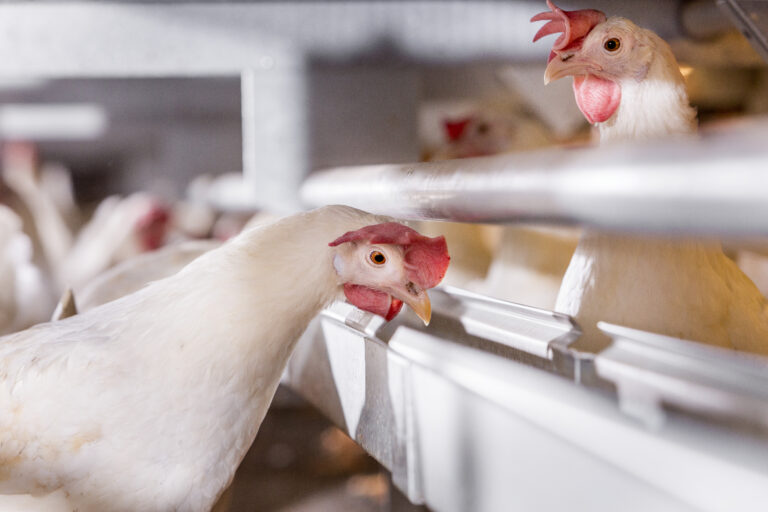
White layers, with their distinct genetic lineage, have been selected over decades for efficiency and persistency. Today, these birds are delivering longer laying cycles, improved liveability and consistently high-quality output, supporting commercial systems under increasing pressure to do more with less.
“Across the board, we’re seeing sustained production and higher egg mass output from white birds, with laying cycles now routinely exceeding 100 weeks,” explains Eloise Lawlor, Commercial Poultry Nutritionist at Premier Nutrition.
A key driver of this performance is their biological efficiency. White birds typically have lower body weight and reduced maintenance requirements and combined with their ability to quickly establish feed and water intake, this creates opportunities for more optimised diet specifications.
“As white birds are very efficient at finding feed and water, we can often reduce dietary density, both in energy and amino acids, without compromising performance,” says Lawlor.
Egg size control remains a multifactorial interaction between genetics, body weight, lighting and nutrient supply. Methionine and linoleic acid remain key drivers, but research also highlights the role of amino acids such as isoleucine.
Mineral nutrition is equally critical. Targeted calcium supply, both in level and particle size, accounts for the extended calcification period in white birds, which can continue several hours after lights on.
“Precision is key,” adds Lawlor. “Providing the right level of nutrients at the right stage is what underpins shell quality and long-term performance; more isn’t always better.”
From a sustainability standpoint, improved feed conversion and longer productive lifespans translate into measurable reductions in carbon footprint per unit of egg output.
As production systems evolve, white layers are no longer a niche alternative; they are a strategic opportunity. For producers focused on efficiency, sustainability and future-proofing their systems, they are increasingly difficult to ignore.