


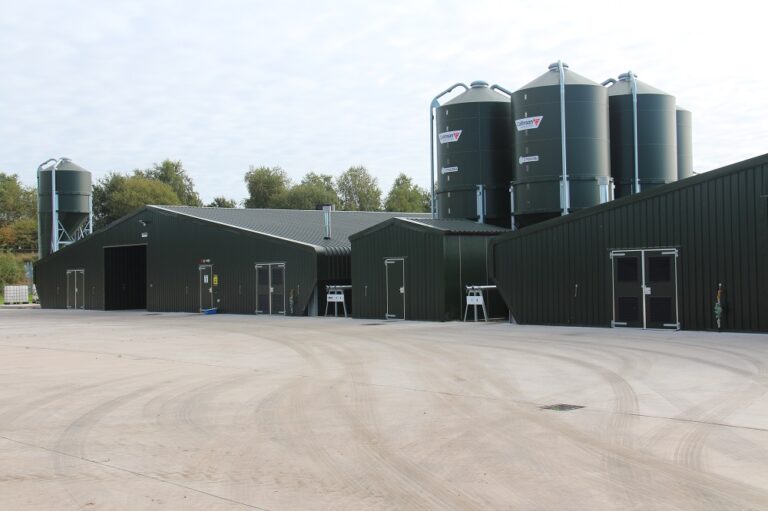
Launched at the British Pig & Poultry Fair, the latest Farm of the Future report from the Royal Agricultural Society of England (RASE) explores how farm building design can reduce emissions, improve energy efficiency and support animal performance.
‘Rethinking farm buildings: Optimising efficiency and reducing emissions’ examines how agricultural infrastructure influences energy use, manure emissions and the carbon intensity of production. The report also explores practical ways to reduce emissions across pig, poultry and cattle housing, grain drying systems and root vegetable storage.
Holly Shearman, head of livestock and Farm of the Future programmes at RASE, said farm buildings should be viewed as long-term investments in emissions reduction and resource efficiencies.
“Farm buildings are often overlooked in net zero discussions, yet they can deliver lasting emissions reductions across every agricultural sector,” she said. “This impact is driven by the construction materials used and operational energy use across a building’s lifetime.”
In addition to these direct sources of emissions, Shearman explained that building design impacts animal health and productivity, with optimal ventilation, temperature control, hygiene, space and comfort reducing emissions per unit of production. “Building infrastructure also influences emissions from slurry and manure management,” she said.
The report advocates for a whole farm approach to decarbonising agricultural buildings, beginning with implementing solutions to reduce embodied carbon and energy demand, before adding renewable energy systems.
“Using lower-carbon construction materials alongside energy-efficient systems such as LED lighting can reduce a building’s environmental impact for decades, while also lowering operating costs,” said Shearman.
The report also highlights renewable energy opportunities, including rooftop solar PV systems or considering anaerobic digestion, that could help farms generate their own energy and reduce long-term costs alongside lowering their carbon footprint.
As well as setting out options to decarbonise farm buildings, the report calls for policy reforms to accelerate investment in low-carbon farm infrastructure, including support for retrofitting existing buildings, renewable energy integration and improved manure management systems.
“Policy must create a clearer pathway for low-carbon farm infrastructure,” said Shearman. “That includes faster planning approval for on-farm renewables, better support for low-carbon construction materials and a more strategic approach to manure management.”