

Poultry News
  • Production
    • Broiler Production
    • Ducks
    • Egg Production
    • Game
    • Hatching
    • Housing
    • Turkeys
  • Processing
  • Business & Politics
    • Business
    • Economics
    • EU & Politics
    • Marketing
    • People
    • Training & Education
  • Welfare
    • Environment
    • Food Safety
    • Vet & Medication
    • Welfare
  • Feed
  • Genetics
  • New Products
  • Magazines
    • March 2026
    • 2026 Feed & Nutrition supplement
    • February 2026
    • January 2026
    • December 2025
    • November 2025
    • October 2025
    • September 2025
    • 2025 Buildings supplement
    • August 2025
    • 2025 Poultry Health supplement
    • July 2025
    • 2025 National Egg and Poultry Awards finalists supplement
    • June 2025
    • 2025 Innovation supplement
    • May 2025
    • April 2025
    • March 2025
    • 2025 Feed and Nutrition supplement
    • February 2025
    • January 2025
    • December 2024
    • November 2024
    • October 2024
    • September 2024
    • 2024 Building for the Future supplement
    • August 2024
    • 2024 Poultry Health supplement
    • July 2024
    • 2024 National Egg and Poultry Awards finalists supplement
    • June 2024
    • 2024 Innovation supplement
    • Pig & Poultry Fair 2024
    • May 2024
    • April 2024
    • March 2024
    • February 2024
    • January 2024
    • December 2023
    • November 2023
    • Processing Equipment Supplement – Nov 2023
    • October 2023
    • Building Supplement – Sept 2023
    • September 2023
  • Jobs
    • Browse Jobs
    • Post a Job
    • Manage Jobs
  • Events
    • National Egg and Poultry Awards
    • Poultry Fair
    • Webinars
Twitter LinkedIn
  • FREE Email Newsletters
  • About Us
  • Advertise
  • Subscribe
  • Contact Us
Twitter LinkedIn
Podcast
Poultry News
  • Production
    • Broiler Production
    • Ducks
    • Egg Production
    • Game
    • Hatching
    • Housing
    • Turkeys
  • Processing
  • Business & Politics
    • Business
    • Economics
    • EU & Politics
    • Marketing
    • People
    • Training & Education
  • Welfare
    • Environment
    • Food Safety
    • Vet & Medication
    • Welfare
  • Feed
  • Genetics
  • New Products
  • Magazines
    1. March 2026
    2. 2026 Feed & Nutrition supplement
    3. February 2026
    4. January 2026
    5. December 2025
    6. November 2025
    7. October 2025
    8. September 2025
    9. 2025 Buildings supplement
    10. August 2025
    11. 2025 Poultry Health supplement
    12. July 2025
    13. 2025 National Egg and Poultry Awards finalists supplement
    14. June 2025
    15. 2025 Innovation supplement
    16. May 2025
    17. April 2025
    18. March 2025
    19. 2025 Feed and Nutrition supplement
    20. February 2025
    21. January 2025
    22. December 2024
    23. November 2024
    24. October 2024
    25. September 2024
    26. 2024 Building for the Future supplement
    27. August 2024
    28. 2024 Poultry Health supplement
    29. July 2024
    30. 2024 National Egg and Poultry Awards finalists supplement
    31. June 2024
    32. 2024 Innovation supplement
    33. Pig & Poultry Fair 2024
    34. May 2024
    35. April 2024
    36. March 2024
    37. February 2024
    38. January 2024
    39. December 2023
    40. November 2023
    41. Processing Equipment Supplement – Nov 2023
    42. October 2023
    43. Building Supplement – Sept 2023
    44. September 2023
    Featured

    Poultry Business – April 2026 issue out now

    By Chloe RyanApril 7, 2026
    Recent

    Poultry Business – April 2026 issue out now

    April 7, 2026

    Poultry Business – March 2026 issue out now

    March 11, 2026

    Poultry Business – 2026 Feed & Nutrition supplement out now

    March 11, 2026
  • Jobs
    • Browse Jobs
    • Post a Job
    • Manage Jobs
  • Events
    • National Egg and Poultry Awards
    • Poultry Fair
    • Webinars
Twitter LinkedIn
Poultry News
Housing

The benefits of barn production

Chloe RyanBy Chloe RyanSeptember 8, 20224 Mins Read
Facebook Twitter LinkedIn Email
Share
Facebook Twitter LinkedIn Email

Investment in barn production could be the answer to maintaining a viable egg business, according to Newquip

This article was first published in the September Buildings Supplement to Poultry Business

Like many sectors, the egg industry has been hit very hard by increasing raw material prices, with feed, labour and energy costs all going up. Due to the rapid expansion in free-range over recent years, an over-supply of egg within the UK market has slowed the rate at which these increases can be passed on to the consumers, which ultimately needs to happen as primary produces and packers struggle for profit margins and viability.

A recent report by Andersons states barn production is expected to grow from its current 3% to 10% of the market by 2025. This is due to the decision to remove enriched colony egg from supermarket shelves, a pledge made prior to all of the recent world events which are affecting the present situation. This decision will hopefully now be one which will allow the industry to return to a sustainable position, where supply and demand are more in balance.

The number of producers who have enriched colonies has declined in recent years and some are opting to convert to barn egg. The conversions, crucially, are resulting in lower bird numbers due to both the lower stocking densities and to comply with integrated pollution prevention and control (IPPC) directive emissions permits, as barn birds have higher emission factors than colony birds. Often the result is around 50% of the
original bird numbers permitted on a site, so a 7% increase in barn production could result in a similar drop in the national flock size.

As we head into the predicted recession, this is an important change, says Adam Dye, managing director at Newquip. Colony eggs will still have a place within the UK, especially given the economic outlook. That said, the increase in recognition of barn production provides another tier within the market from which consumers can select.

“It is all about providing consumer choice,” says Dye. “The UK industry has continually evolved to ensure welfare standards are some of the highest in the world, and consistently reinvests to make sure we remain at the forefront in this regard.”

The requirement for an economical egg on the supermarket shelves will definitely mean the production ratios of colony, barn, free-range and organic will need to change, Dye says. It is most likely that investment in barn will come from existing sites, either the conversion of colony units or to allow the resting of ranges within the free-range sector.

“Neither of these solutions increases the national flock, and while we are trying to increase the longevity of birds, hopefully the overall reduction of bird numbers will allow for a natural supply and demand correction without causing further suffering within the industry.”

Some of the main benefits of barn over free-range include being able to control the environment via automation without as many external influences. The temperature, lighting and ventilation can be monitored to create the
optimum environment for the birds, so they will be less likely to feel stressed or overfeed. Reducing stress also means pecking is managed, resulting in better feather cover and fewer losses. The current systems are able to automate everything from the feeding times of the stock, to ensuring the eggs arrive at the packing centre directly. While free-range develops and uses much of the same technology, the raw material cost rises we have seen recently will increase the difference in the cost of production.

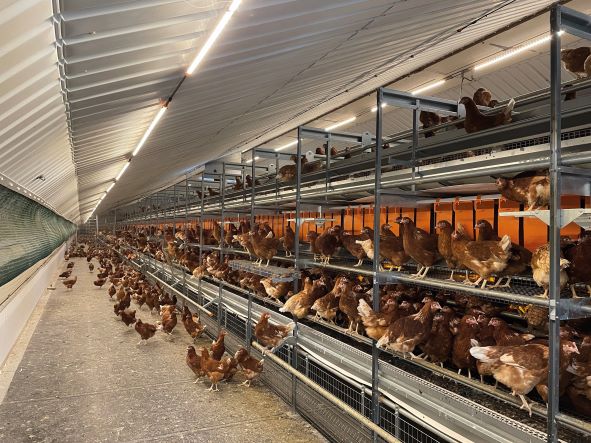
Newquip’s Natura systems from Big Dutchman have been designed with both animal welfare and the environment in mind, Dye explains. Multiple levels allow all floor space to be used for litter, with distinct zones for feeding and drinking, laying, resting, and scratching, enabling the birds to move freely around the barn. The influence of external factors, such as adverse weather, disease and predators, can be controlled, as well as ensuring current regulations are met.

Dye says: “The reduction in the number of birds in the housing space means a smaller amount of supply, but the demand is unaffected. With the surplus of eggs in the industry, lowering bird numbers helps to reduce this excess.

“Direct online also removes the need to pack and transport the eggs to a packing centre because it all can be done on site, with a couple of operators overseeing the process. Farming is not so labour-intensive if you can involve technology in this way.”

Share. Facebook Twitter LinkedIn Email
Previous ArticleEustice sacked, as new Defra secretary appointed
Next Article Marks & Spencer completes transition to 100% slower grown fresh chicken
Chloe Ryan

Editor of Poultry Business, Chloe has spent the past decade writing about the food industry from farming, through manufacturing, retail and foodservice. When not working, dog walking and reading biographies are her favourite hobbies.

Read Similar Stories

Production

Comment: Prices are good but the industry is stagnating

April 10, 20264 Mins Read
Production

UK poultry sector feeling the squeeze, report warns

April 9, 20264 Mins Read
Production

Housing rules lift brings relief as RSPCA Assured urges careful return to range

April 8, 20263 Mins Read
Latest News

Comment: Prices are good but the industry is stagnating

April 10, 2026

Shell Shocked: How Ukrainian eggs threaten UK standards

April 10, 2026

UK poultry sector feeling the squeeze, report warns

April 9, 2026
Sponsored Content

Address beta-mannans in broiler diets to optimise bird health and performance

April 1, 2026

Stay one step ahead of outbreaks

December 3, 2025
© 2024 MA Agriculture Ltd, a Mark Allen Group company

Privacy Policy | Cookies Policy | Terms & Conditions

  • Farmers Weekly
  • AA Farmer
  • Farm Contractor
  • Pig World

Type above and press Enter to search. Press Esc to cancel.