
Poultry News
  • Production
    • Broiler Production
    • Ducks
    • Egg Production
    • Game
    • Hatching
    • Housing
    • Turkeys
  • Processing
  • Business & Politics
    • Business
    • Economics
    • EU & Politics
    • Marketing
    • People
    • Training & Education
  • Welfare
    • Environment
    • Food Safety
    • Vet & Medication
    • Welfare
  • Feed
  • Genetics
  • New Products
  • Magazines
    • September 2026
    • 2026 Buildings supplement
    • August 2026
    • 2026 Health supplement
    • July 2026
    • 2026 National Egg and Poultry Awards finalists supplement
    • June 2026
    • 2026 Innovation supplement
    • 2026 British Pig & Poultry Fair guide
    • May 2026
    • March 2026
    • 2026 Feed & Nutrition supplement
    • February 2026
    • January 2026
    • December 2025
    • November 2025
    • October 2025
    • September 2025
    • 2025 Buildings supplement
    • August 2025
    • 2025 Poultry Health supplement
    • July 2025
    • 2025 National Egg and Poultry Awards finalists supplement
    • June 2025
    • 2025 Innovation supplement
    • May 2025
    • April 2025
    • March 2025
    • 2025 Feed and Nutrition supplement
    • February 2025
    • January 2025
    • December 2024
    • November 2024
    • October 2024
    • September 2024
    • 2024 Building for the Future supplement
    • August 2024
    • 2024 Poultry Health supplement
    • July 2024
    • 2024 National Egg and Poultry Awards finalists supplement
    • June 2024
    • 2024 Innovation supplement
    • Pig & Poultry Fair 2024
    • May 2024
    • April 2024
    • March 2024
    • February 2024
    • January 2024
    • December 2023
    • November 2023
    • Processing Equipment Supplement – Nov 2023
    • October 2023
    • Building Supplement – Sept 2023
    • September 2023
  • Jobs
    • Browse Jobs
    • Post a Job
    • Manage Jobs
  • Events
    • National Egg and Poultry Awards
    • Poultry Fair
    • Webinars
Twitter LinkedIn
  • FREE Email Newsletters
  • About Us
  • Advertise
  • Subscribe
  • Contact Us
Twitter LinkedIn
Podcast
Poultry News
  • Production
    • Broiler Production
    • Ducks
    • Egg Production
    • Game
    • Hatching
    • Housing
    • Turkeys
  • Processing
  • Business & Politics
    • Business
    • Economics
    • EU & Politics
    • Marketing
    • People
    • Training & Education
  • Welfare
    • Environment
    • Food Safety
    • Vet & Medication
    • Welfare
  • Feed
  • Genetics
  • New Products
  • Magazines
    1. September 2026
    2. 2026 Buildings supplement
    3. August 2026
    4. 2026 Health supplement
    5. July 2026
    6. 2026 National Egg and Poultry Awards finalists supplement
    7. June 2026
    8. 2026 Innovation supplement
    9. 2026 British Pig & Poultry Fair guide
    10. May 2026
    11. March 2026
    12. 2026 Feed & Nutrition supplement
    13. February 2026
    14. January 2026
    15. December 2025
    16. November 2025
    17. October 2025
    18. September 2025
    19. 2025 Buildings supplement
    20. August 2025
    21. 2025 Poultry Health supplement
    22. July 2025
    23. 2025 National Egg and Poultry Awards finalists supplement
    24. June 2025
    25. 2025 Innovation supplement
    26. May 2025
    27. April 2025
    28. March 2025
    29. 2025 Feed and Nutrition supplement
    30. February 2025
    31. January 2025
    32. December 2024
    33. November 2024
    34. October 2024
    35. September 2024
    36. 2024 Building for the Future supplement
    37. August 2024
    38. 2024 Poultry Health supplement
    39. July 2024
    40. 2024 National Egg and Poultry Awards finalists supplement
    41. June 2024
    42. 2024 Innovation supplement
    43. Pig & Poultry Fair 2024
    44. May 2024
    45. April 2024
    46. March 2024
    47. February 2024
    48. January 2024
    49. December 2023
    50. November 2023
    51. Processing Equipment Supplement – Nov 2023
    52. October 2023
    53. Building Supplement – Sept 2023
    54. September 2023
    Featured

    Poultry Business – September 2026 issue out now

    By Chloe RyanSeptember 9, 2026
    Recent

    Poultry Business – September 2026 issue out now

    September 9, 2026

    Poultry Business – 2026 Buildings supplement out now

    September 9, 2026

    Poultry Business – August 2026 issue out now

    August 13, 2026
  • Jobs
    • Browse Jobs
    • Post a Job
    • Manage Jobs
  • Events
    • National Egg and Poultry Awards
    • Poultry Fair
    • Webinars
Twitter LinkedIn
Poultry News
News

Simple way of ‘listening’ to chicks could dramatically improve welfare

Chloe RyanBy Chloe RyanJune 11, 20204 Mins Read
Facebook Twitter LinkedIn Email
Share
Facebook Twitter LinkedIn Email
A simple and low-cost method of ‘listening’ to chicks may allow welfare issues to be picked up at the earliest possible opportunity, according to new research.
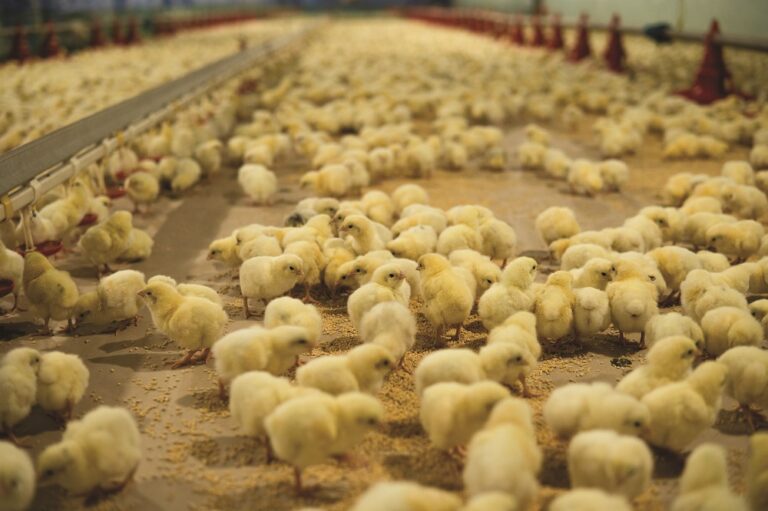
A team of animal welfare and behaviour scientists from across the UK collected acoustic recordings in 12 flocks of 25,000 chicks.

In nature, when uncomfortable or uncertain of their surroundings, chicks would attract the hen with a loud and distinctive distress call.

In this study, the researchers demonstrated that these calls could be clearly picked up above other noises such as regular calling and farm machinery.

But where previous research has linked distress calling to stress and anxiety-like states in chicks, this study also shows it could predict flock-level behaviour, future growth and mortality rate.

That suggests distress calling may be an ‘iceberg indicator’ – a single measure that captures a range of welfare information at once.

The study, published in the Journal of the Royal Society Interface, involved researchers from the University of Plymouth, University of Roehampton, SRUC, and Newcastle University. It was funded by the Biotechnology and Biological Sciences Research Council in an Innovate UK partnership with Greengage Lighting Ltd.

Lead author Dr Katherine Herborn, Lecturer in Physiology and Behaviour at the University of Plymouth, said: “On their first day in a barn, all chicks are going to call because they are in strange surroundings. But after that they learn where to find food and water and settle into that new world, so if you are still hearing a lot of distress calling after a few days it could be a sign there is something wrong. With over 50 billion birds being produced each year, tools to support simple interventions at the right time could potentially have big impacts on welfare and quality of life for these birds.”

Lucy Asher, Professor in Animal Behaviour Informatics at Newcastle University and Principal Investigator on the BBSRC project, added: “By analysing the calls chicks make in their first few days of life, it seems we are able to predict weight gained and the number of deaths in the whole flock for the whole life. This means we could have a very powerful tool to help chicken welfare. What is particularly useful is that this welfare indicator can be used early on in life, whereas most chicken welfare indicators are taken later in their life when it is too late to make major improvements. As an added benefit this study shows how we can measure chick calls automatically, meaning no extra work for farmers, but more information to help them improve chicken welfare.”

The method used in the research involved measuring the ‘spectral entropy’ of the soundscape –a value that describes how sound can vary from a clear, tonal note up to white noise.

As increasing numbers of chicks call in unison, the usual background noise of the farm becomes overall more tonal. This computationally simple way of counting distress calls could act as an early-warning signal to farm staff that chicks require attention and ultimately improve chick welfare across their lifetimes.

The findings support previous studies on the benefits of automated monitoring of livestock for real-time warnings of emerging welfare concerns. They also emphasise the importance of using animal-centred behavioural and emotional welfare indicators alongside traditional environment and productivity monitoring on poultry farms, to improve conditions from the birds’ own perspective.

Dr Alan McElligott, Reader in Animal Behaviour at the University of Roehampton, added: “The results of this research show how useful vocalisations can be for monitoring welfare, and especially in an age when animal welfare needs should be central to progress in precision livestock farming.”

Share. Facebook Twitter LinkedIn Email
Previous ArticleFarming union proposes drive-through AGM
Next Article Moy Park appoints new head of technical in its fresh poultry business
Chloe Ryan

Editor of Poultry Business, Chloe has spent the past decade writing about the food industry from farming, through manufacturing, retail and foodservice. When not working, dog walking and reading biographies are her favourite hobbies.

Read Similar Stories

News

2 Sisters seeks to increase processing capacity at Sandycroft poultry plant

September 14, 20261 Min Read
New Products

Noble Foods launches new food-to-go brand Kudos

September 8, 20261 Min Read
News

Ryan Dakin appointed as new chair of Poultry Industry Programme

September 4, 20262 Mins Read
Latest News

Pilgrim’s Europe completes £6m update at Cambridgeshire poultry farm

September 16, 2026

Comment: I need a degree in meteorology

September 16, 2026

Bird flu hits French duck sector with 7,600 culled, despite vaccination strategy

September 15, 2026
Sponsored Content

Make poultry diets more sustainable without compromising performance

September 7, 2026

Summer: Is this the best time to review and make improvements to your farm biosecurity?

August 1, 2026
© 2024 MA Agriculture Ltd, a Mark Allen Group company

Privacy Policy | Cookies Policy | Terms & Conditions

  • Farmers Weekly
  • AA Farmer
  • Farm Contractor
  • Pig World

Type above and press Enter to search. Press Esc to cancel.