


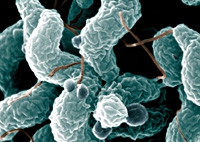
A low-power violet-blue light treatment could offer a new way of reducing Campylobacter contamination in poultry processing, research by the University of Reading and the Animal and Plant Health Agency (APHA) suggests.
The technique, known as violet-blue photodynamic inactivation (VB-PDI), was tested against 64 strains of Campylobacter taken from UK poultry. Researchers found that all of the strains were killed by the treatment, including strains resistant to antibiotics.
The treatment uses visible violet-blue light to trigger molecules naturally present within the bacteria to produce reactive oxygen species, killing the cells. It requires no added chemicals or direct contact with the food.
Researchers said the approach could potentially be applied to poultry carcases in processing plants after slaughter, although trials using naturally contaminated poultry in commercial processing conditions are still required.
The study also found no evidence that Campylobacter developed resistance to the treatment. One strain repeatedly exposed to the light over 15 rounds showed no increased tolerance.
The researchers estimated that a 100-fold reduction in contamination could reduce the proportion of highly contaminated carcases reaching retail from around one in 10 to one in 50.
The research, published in Microbiology, builds on earlier work examining the susceptibility of Campylobacter to violet-blue light.
Dr Samuel Connelly of APHA, who co-led the research, said further evaluation using contaminated meat samples was required, but described the results across different Campylobacter species and resistance profiles as “highly encouraging”.