


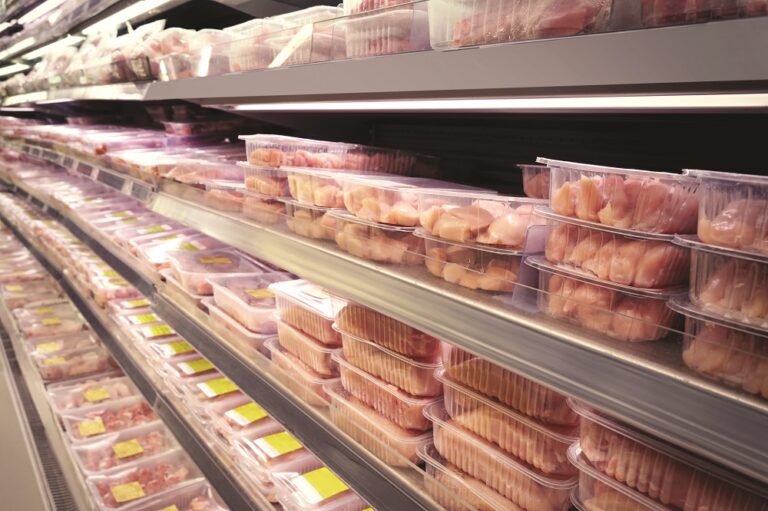
Meat and poultry inflation during December nudged up slightly by 0.82% with the price of beef easing back by 0.1% thanks to there being little in the way of increases and rump steak dropping back by 1.36% (26p/kg).
“December is traditionally the time when supermarkets compete for customers using beef and lamb roasting joints and whilst beef rose slightly (0.71%) the average price of a whole leg of lamb fell by £1.16kg (7.46%) on November,” said Tony Goodger, head of communications at AIMS.
“I also saw several supermarkets offering boneless legs of pork within their roasting joint Christmas mix this year with the average price dropping 26p/kg on the previous month.
“With the exception of rump, none of the other beef steaks nor beef mince moved in price across December”, Tony continued.
“However, within lamb, steaks rose an average of 6.35% (+£1.19kg) and mince +1.29% whilst in pork loin steaks, belly slices and chops all rose. Pork mince was unchanged verses November.”
“With so many consumers struggling to afford Christmas it was unsurprising that many have switched to chicken with the price of a whole large British chicken up 4.22% due in part no doubt to some supply size issues across the UK and EU due to HPAI. Also of note was the 39p/kg increase (4.47%) in chicken thigh fillets.
“Looking at the whole of 2025 meat and poultry prices rose by an average of 15.91% with beef having the biggest impact up by 32.26%, an average of £4.89p/kg, lamb and chicken (+8.94% and 7.64% respectively) also surged ahead while pork in the main was flat, up just 16p/kg across the cuts surveyed”, said Goodger.
“With also every price point surveyed exiting 2025 substantially higher than they entered the year I believe that the watch word for 2026 will be value with the supermarket and foodservice buyers looking to strategically use spot price deals from the global market as a means to lead promotional pricing and thus drive footfall and customer loyalty,” he said.
“My wish for the new year, it is that the government get a grip on farm planning applications in order that investment can be made in modern efficient production systems in the pig, broiler, and egg sectors. It is only through an increased supply of high quality British produced pork, chicken, and eggs that we can maintain a profitable industry as well as countering imports from overseas lower welfare production systems.”