

Poultry News
  • Production
    • Broiler Production
    • Ducks
    • Egg Production
    • Game
    • Hatching
    • Housing
    • Turkeys
  • Processing
  • Business & Politics
    • Business
    • Economics
    • EU & Politics
    • Marketing
    • People
    • Training & Education
  • Welfare
    • Environment
    • Food Safety
    • Vet & Medication
    • Welfare
  • Feed
  • Genetics
  • New Products
  • Magazines
    • July 2026
    • 2026 National Egg and Poultry Awards finalists supplement
    • June 2026
    • 2026 Innovation Supplement
    • 2026 British Pig & Poultry Fair guide
    • May 2026
    • March 2026
    • 2026 Feed & Nutrition supplement
    • February 2026
    • January 2026
    • December 2025
    • November 2025
    • October 2025
    • September 2025
    • 2025 Buildings supplement
    • August 2025
    • 2025 Poultry Health supplement
    • July 2025
    • 2025 National Egg and Poultry Awards finalists supplement
    • June 2025
    • 2025 Innovation supplement
    • May 2025
    • April 2025
    • March 2025
    • 2025 Feed and Nutrition supplement
    • February 2025
    • January 2025
    • December 2024
    • November 2024
    • October 2024
    • September 2024
    • 2024 Building for the Future supplement
    • August 2024
    • 2024 Poultry Health supplement
    • July 2024
    • 2024 National Egg and Poultry Awards finalists supplement
    • June 2024
    • 2024 Innovation supplement
    • Pig & Poultry Fair 2024
    • May 2024
    • April 2024
    • March 2024
    • February 2024
    • January 2024
    • December 2023
    • November 2023
    • Processing Equipment Supplement – Nov 2023
    • October 2023
    • Building Supplement – Sept 2023
    • September 2023
  • Jobs
    • Browse Jobs
    • Post a Job
    • Manage Jobs
  • Events
    • National Egg and Poultry Awards
    • Poultry Fair
    • Webinars
Twitter LinkedIn
  • FREE Email Newsletters
  • About Us
  • Advertise
  • Subscribe
  • Contact Us
Twitter LinkedIn
Podcast
Poultry News
  • Production
    • Broiler Production
    • Ducks
    • Egg Production
    • Game
    • Hatching
    • Housing
    • Turkeys
  • Processing
  • Business & Politics
    • Business
    • Economics
    • EU & Politics
    • Marketing
    • People
    • Training & Education
  • Welfare
    • Environment
    • Food Safety
    • Vet & Medication
    • Welfare
  • Feed
  • Genetics
  • New Products
  • Magazines
    1. July 2026
    2. 2026 National Egg and Poultry Awards finalists supplement
    3. June 2026
    4. 2026 Innovation Supplement
    5. 2026 British Pig & Poultry Fair guide
    6. May 2026
    7. March 2026
    8. 2026 Feed & Nutrition supplement
    9. February 2026
    10. January 2026
    11. December 2025
    12. November 2025
    13. October 2025
    14. September 2025
    15. 2025 Buildings supplement
    16. August 2025
    17. 2025 Poultry Health supplement
    18. July 2025
    19. 2025 National Egg and Poultry Awards finalists supplement
    20. June 2025
    21. 2025 Innovation supplement
    22. May 2025
    23. April 2025
    24. March 2025
    25. 2025 Feed and Nutrition supplement
    26. February 2025
    27. January 2025
    28. December 2024
    29. November 2024
    30. October 2024
    31. September 2024
    32. 2024 Building for the Future supplement
    33. August 2024
    34. 2024 Poultry Health supplement
    35. July 2024
    36. 2024 National Egg and Poultry Awards finalists supplement
    37. June 2024
    38. 2024 Innovation supplement
    39. Pig & Poultry Fair 2024
    40. May 2024
    41. April 2024
    42. March 2024
    43. February 2024
    44. January 2024
    45. December 2023
    46. November 2023
    47. Processing Equipment Supplement – Nov 2023
    48. October 2023
    49. Building Supplement – Sept 2023
    50. September 2023
    Featured

    Poultry Business – July 2026 issue out now

    By Chloe RyanJuly 2, 2026
    Recent

    Poultry Business – July 2026 issue out now

    July 2, 2026

    2026 National Egg and Poultry Awards finalists supplement out now

    July 2, 2026

    Poultry Business – June 2026 issue out now

    June 8, 2026
  • Jobs
    • Browse Jobs
    • Post a Job
    • Manage Jobs
  • Events
    • National Egg and Poultry Awards
    • Poultry Fair
    • Webinars
Twitter LinkedIn
Poultry News
Broiler Production

Veranda extravaganza

Chloe RyanBy Chloe RyanJuly 3, 20174 Mins Read
Facebook Twitter LinkedIn Email
Share
Facebook Twitter LinkedIn Email

Could verandas on poultry sheds be the best solution to retaining free-range status when AI restrictions are in place, or do consumers just need better educating about why housing birds is best?

By Rachael Porter

With avian flu hitting the headlines again, and fears that the recent confirmation of new cases could signify that the disease is circulating in the UK’s non-migratory wild bird population, it’s imperative that the industry takes steps to not only protect the health and welfare of free-range broiler and laying flocks but to also their free-range status.

NFU poultry board member Charles Bourns, who is also chairman of Copa Cogeca’s poultry and eggs working party, says that verandas are a possible to solution to safeguard both. And he’s just back from a meeting with the European Commission to discuss possible solutions to the growing AI crisis across Europe.

Verandas were firmly on the table as a possible practical solution for UK producers, seeking to retain their status should birds have to remain inside for longer than the permitted 12-week period due to the threat of AI.

“Feedback from producers is that they would like to see a repeat of this year’s measures in terms of protecting free-range flocks from avian flu,” he says. “Keeping birds housed kept costs to a minimum and protected the premium that they command for their free-range produce.

“Indeed, it’s the solution of preference adopted by EU countries that are hit by avian flu more severely and more frequently that the UK.

Spanish view

In other countries, measures like verandas would be considered unnecessary because consumers are more accepting of the need to house birds in a time of crisis.

“Spanish consumers, for example, understand that,” says Bourns. “They accept that and that’s one reason why Spanish producers are not keen on the idea of verandas as a solution. They just see them as an unnecessary additional investment.”

But it’s a different story in the UK. Pressure is coming from Government and retailers, who say that a repeat of what happened in 2017 will not be acceptable in 2018 and that steps should be taken to find a solution to protect free-range status. “They will not allow a derogation on current free-range rules again,” says Bourns.

Cost concerns

Opposition to verandas from producers is predominantly due to cost, which Bourns estimates will be between £1.50 and £3 per bird. “That’s quite a significant investment, but one way to view it is as an insurance policy. Should there be prolonged restrictions again, and verandas are in place and in use, producers would, in theory, retain their free-range status.

Built properly, verandas can be extremely effective at protecting flocks from AI, “providing wild birds can’t gain access or have contact with the flock,” says Bourns.

Stocking density

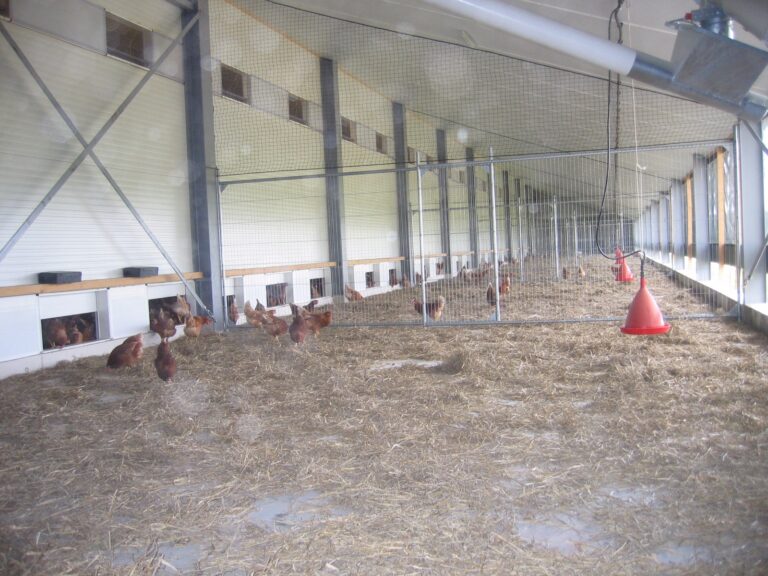
Norfolk-based producer Simon Dann agrees. He has verandas on the buildings that house his 18,500-strong Shaver free-range egg-laying flock. In fact, he’s had verandas for the past 10 years and they’re in use all the time. He constructed them from himself from sections of old shed taken from a local Bernard Matthews unit. He has three and they’re between three and four metres wide, have wooden, wire-meshed ‘walls’, concrete floors that are bedded with a little chopped straw, and a solid, sloping rooves.

“I think of them as all-weather play pens really – somewhere for the birds to scratch about when the weather out on the range isn’t so inviting. And they’ve also served to reduce my stocking density a little.

“The standard for a free-range house is nine birds per square metre and my houses now stand at six birds. And they were inexpensive to build – just time, a few second-hand panels and some concrete.”

Bourns says that the closest he’s seen to a veranda on a commercial poultry unit is the ‘winter garden’ system used on many Dutch and German farms. “But they still lost their free-range status when they housed their birds due to AI.”

The Dutch agree that verandas could be answer to housing free-range flocks for long periods, due to the AI risk, and retaining free-range status. “But we’ll have to see what the European Commission decides, after it’s shared our views and information with its panel of experts,” says Bourns. “With so many EU countries opposed to verandas as a possible solution, it’ll be very interesting to see what the outcome is.”


Share. Facebook Twitter LinkedIn Email
Previous ArticleNew study urges older people to eat more eggs
Next Article Final call for Nuffield Farming Scholarship applications
Chloe Ryan

Editor of Poultry Business, Chloe has spent the past decade writing about the food industry from farming, through manufacturing, retail and foodservice. When not working, dog walking and reading biographies are her favourite hobbies.

Read Similar Stories

Broiler Production

Comment: Reflections on a year of lower stocking densities

July 3, 20263 Mins Read
Broiler Production

Comment: Our fan motors keep burning out

July 2, 20264 Mins Read
Business

Skea Egg Farms reports higher revenue and profits

July 1, 20261 Min Read
Latest News

Comment: Reflections on a year of lower stocking densities

July 3, 2026

Comment: British farms have a vast uptapped water asset

July 3, 2026

Breeding success

July 2, 2026
Sponsored Content

Longer laying cycles need longer Salmonella protection

July 1, 2026

Take Control of Your Farm’s Biosecurity with Livetec

May 1, 2026
© 2024 MA Agriculture Ltd, a Mark Allen Group company

Privacy Policy | Cookies Policy | Terms & Conditions

  • Farmers Weekly
  • AA Farmer
  • Farm Contractor
  • Pig World

Type above and press Enter to search. Press Esc to cancel.