

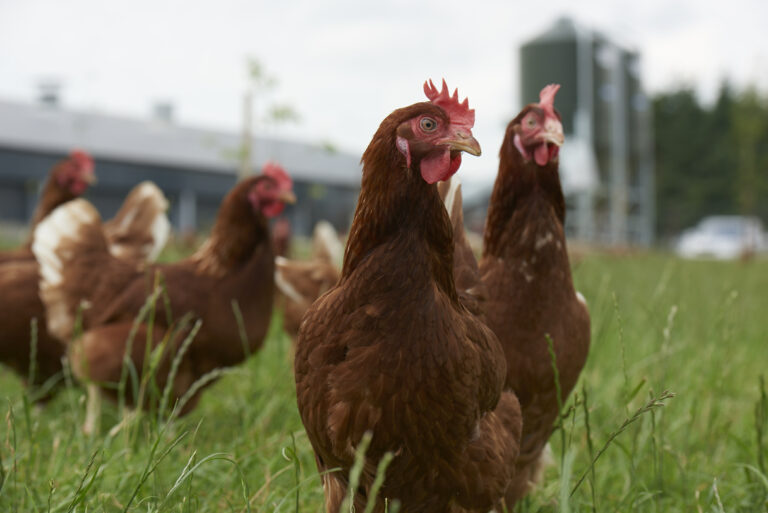
Dual-purpose chicken breeds are not a commercially or environmentally viable replacement for specialised laying hens at the scale required by the UK egg industry, according to new research commissioned by the Vegetarian Society.
The report, by animal welfare researcher Jenny L Mace, examines dual-purpose breeds as an alternative to the routine culling of male layer chicks.
It concludes that dual-purpose birds have lower productivity which means significantly more birds would need to be bred and reared to maintain current levels of egg and meat production.
This would increase demand for land, feed and other resources. The research therefore concludes that dual-purpose production cannot realistically replace existing commercial egg production systems at the scale required in the UK.
The report acknowledges that dual-purpose birds can have welfare benefits, including potentially fewer health and behavioural problems associated with highly specialised layer and meat breeds.
However, it argues these benefits do not outweigh the productivity and resource-use implications of replacing specialist birds across the wider industry.
The report instead supports the use of in-ovo sexing technology, which identifies male embryos before hatching, as a route to ending the routine culling of day-old male chicks while retaining specialised egg production.
A separate peer-reviewed study published this year found dual-purpose genotypes produced 19–25% fewer eggs and took 37–50% longer to reach 2.1kg than specialised commercial controls, although the researchers identified potential for the system in some organic and higher-value markets.