

Poultry News
  • Production
    • Broiler Production
    • Ducks
    • Egg Production
    • Game
    • Hatching
    • Housing
    • Turkeys
  • Processing
  • Business & Politics
    • Business
    • Economics
    • EU & Politics
    • Marketing
    • People
    • Training & Education
  • Welfare
    • Environment
    • Food Safety
    • Vet & Medication
    • Welfare
  • Feed
  • Genetics
  • New Products
  • Magazines
    • July 2026
    • 2026 National Egg and Poultry Awards finalists supplement
    • June 2026
    • 2026 Innovation Supplement
    • 2026 British Pig & Poultry Fair guide
    • May 2026
    • March 2026
    • 2026 Feed & Nutrition supplement
    • February 2026
    • January 2026
    • December 2025
    • November 2025
    • October 2025
    • September 2025
    • 2025 Buildings supplement
    • August 2025
    • 2025 Poultry Health supplement
    • July 2025
    • 2025 National Egg and Poultry Awards finalists supplement
    • June 2025
    • 2025 Innovation supplement
    • May 2025
    • April 2025
    • March 2025
    • 2025 Feed and Nutrition supplement
    • February 2025
    • January 2025
    • December 2024
    • November 2024
    • October 2024
    • September 2024
    • 2024 Building for the Future supplement
    • August 2024
    • 2024 Poultry Health supplement
    • July 2024
    • 2024 National Egg and Poultry Awards finalists supplement
    • June 2024
    • 2024 Innovation supplement
    • Pig & Poultry Fair 2024
    • May 2024
    • April 2024
    • March 2024
    • February 2024
    • January 2024
    • December 2023
    • November 2023
    • Processing Equipment Supplement – Nov 2023
    • October 2023
    • Building Supplement – Sept 2023
    • September 2023
  • Jobs
    • Browse Jobs
    • Post a Job
    • Manage Jobs
  • Events
    • National Egg and Poultry Awards
    • Poultry Fair
    • Webinars
Twitter LinkedIn
  • FREE Email Newsletters
  • About Us
  • Advertise
  • Subscribe
  • Contact Us
Twitter LinkedIn
Podcast
Poultry News
  • Production
    • Broiler Production
    • Ducks
    • Egg Production
    • Game
    • Hatching
    • Housing
    • Turkeys
  • Processing
  • Business & Politics
    • Business
    • Economics
    • EU & Politics
    • Marketing
    • People
    • Training & Education
  • Welfare
    • Environment
    • Food Safety
    • Vet & Medication
    • Welfare
  • Feed
  • Genetics
  • New Products
  • Magazines
    1. July 2026
    2. 2026 National Egg and Poultry Awards finalists supplement
    3. June 2026
    4. 2026 Innovation Supplement
    5. 2026 British Pig & Poultry Fair guide
    6. May 2026
    7. March 2026
    8. 2026 Feed & Nutrition supplement
    9. February 2026
    10. January 2026
    11. December 2025
    12. November 2025
    13. October 2025
    14. September 2025
    15. 2025 Buildings supplement
    16. August 2025
    17. 2025 Poultry Health supplement
    18. July 2025
    19. 2025 National Egg and Poultry Awards finalists supplement
    20. June 2025
    21. 2025 Innovation supplement
    22. May 2025
    23. April 2025
    24. March 2025
    25. 2025 Feed and Nutrition supplement
    26. February 2025
    27. January 2025
    28. December 2024
    29. November 2024
    30. October 2024
    31. September 2024
    32. 2024 Building for the Future supplement
    33. August 2024
    34. 2024 Poultry Health supplement
    35. July 2024
    36. 2024 National Egg and Poultry Awards finalists supplement
    37. June 2024
    38. 2024 Innovation supplement
    39. Pig & Poultry Fair 2024
    40. May 2024
    41. April 2024
    42. March 2024
    43. February 2024
    44. January 2024
    45. December 2023
    46. November 2023
    47. Processing Equipment Supplement – Nov 2023
    48. October 2023
    49. Building Supplement – Sept 2023
    50. September 2023
    Featured

    Poultry Business – July 2026 issue out now

    By Chloe RyanJuly 2, 2026
    Recent

    Poultry Business – July 2026 issue out now

    July 2, 2026

    2026 National Egg and Poultry Awards finalists supplement out now

    July 2, 2026

    Poultry Business – June 2026 issue out now

    June 8, 2026
  • Jobs
    • Browse Jobs
    • Post a Job
    • Manage Jobs
  • Events
    • National Egg and Poultry Awards
    • Poultry Fair
    • Webinars
Twitter LinkedIn
Poultry News
Production

Technical advice: Getting water right

Chloe RyanBy Chloe RyanJanuary 17, 20205 Mins Read
Facebook Twitter LinkedIn Email
Share
Facebook Twitter LinkedIn Email

It may be a basic requirement, but getting water sanitation fine-tuned on your farm can pay big dividends in bird performance.

By Stuart Thomson, head of sales & technical, Aviagen UK

Water is an essential nutrient for poultry, and the provision of clean water throughout production promotes bird health, welfare and performance.  Controlling bacterial contamination and biofilm formation in the drinking system is key to reducing bird exposure to harmful organisms and protecting bird health.

Microbial contamination

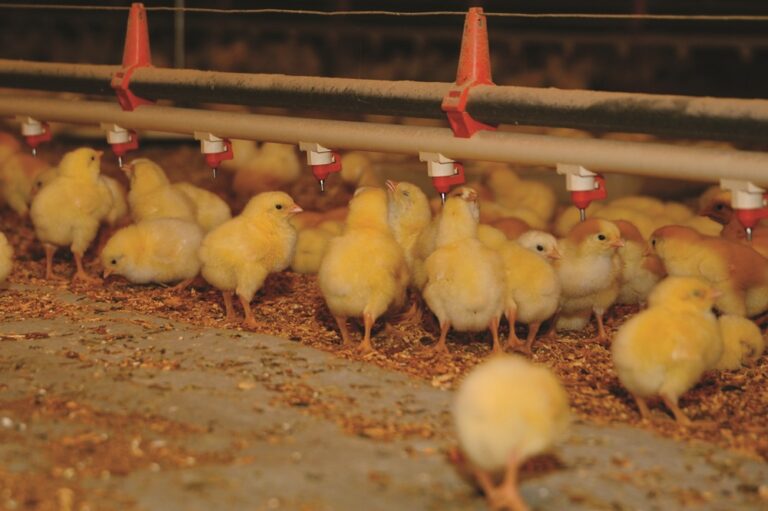
While the introduction of enclosed drinking systems, such as nipple lines, has significantly aided water quality, it is important not to forget that water is highly vulnerable to microbial contamination.  The water lines that carry water to the birds are not transparent and it is not possible to see the levels of contamination within them.  Even water that is of an acceptable quality at source can have significantly higher levels of microbial contamination at the end of the drinker system (Table 1).  Controlling the development of this contamination throughout the production period can be achieved through the use of an appropriate water sanitation programme.

Table 1. Aerobic bacteria levels in drip samples

Farm At source At the end of the line
A 2,700 26,600
B 600 282,000
C 0 4,775,000

Source: Poultry Drinking Water Sanitation: Importance and Options, Maharjan and Watkins, 2016

Water sanitation options

The aim of any water sanitation programme is to create residual protection against recontamination throughout the whole water distribution system and there are a number of water sanitation options available for poultry including ozone, chlorine dioxide, UV light, certain acids and hydrogen peroxide.  But chlorination is the most common sanitation methodology used in many countries. 

Chlorination is an effective way to achieve water sanitation as it:

  • Provides good residual protection against recontamination,
  • Uses products that are easily accessible as well as economical,
  • Is easy to use and monitor,
  • Offers several options for application,
  • Promotes good flock health.

To maintain proper sanitation and residual protection from bacterial contamination it is recommended to achieve a chlorine level of 3-5ppm (measured at the end of the drinker line).

When chlorine is added to water at the optimal pH range it forms Hypochlorous acid which is the active sanitising agent.  For chlorination to be effective water pH must be between 5 and 7 and an acidifier may need to be added to the water to reduce pH to this level.  If water pH is above 7, the production of Hypochlorous acid is reduced and the effectiveness of chlorination is significantly is affected. The choice of acidifier needs careful consideration to avoid any impact on water consumption.  Options for acidification include inorganic acids or mixtures of inorganic and organic acids.  When using chlorine and acidifiers together they should be added to the water system separately to avoid toxic gas formation.

Other factors that can affect the efficacy of chlorination include:

  1. Contact time – the time required between injection and water consumption will vary depending on chlorine concentration, type of contaminants, water pH and water temperature,
  2. Water temperature – a temperature of below 18oC will reduce the effectiveness of chlorination,
  3. Organic matter – the presence of organic matter can inactivate chlorine,
  4. Water hardness – the ideal level of scale causing minerals is 0-400ppm,
  5. Chlorine age and storage – chlorine can be inactivated if stored for too long or stored in transparent containers for too long.

Where chlorination is not permitted, there are other effective water sanitation options (Table 2).

Table 2. Alternative water sanitation methods to chlorination

Alternative Option Pros Cons
Hydrogen Peroxide Has a rapid bacterial action and is effective against a wide range of viruses, yeasts and fungi.  Works well to breakdown biofilms and is non-corrosive. Can be difficult to source and handling requires extreme care.
Chlorine dioxide A good water sanitiser, which can work better than chlorine. Is effective over a wide pH range (4-9). Has a highly reactive chemical nature and is more expensive than chlorine.  If organic load is high, levels required to be effective can affect taste and smell of water.
Trichloroisocyanuric acid Strong disinfectant, used as a chlorinating agent. Only effective over a narrow pH range.
Ozone Effective against bacteria and viruses. Provides no residual sanitation.
UV light Effective water sanitiser. Provides no residual sanitation.


What is best for your flock?

Within poultry production a range of water sources can be used, but, no matter where it comes from, it is important that the water provided to a flock is free from microbial contamination for flock health and performance, and, ultimately,  for food safety.  The key to successful water sanitation is to find out what works best for the flock and local circumstances, while always following local legislation: to provide residual disinfection throughout the drinking system, inactivate microbes, control biofilm and neutralise undesired contaminants.  This means understanding the sanitising product of choice and how it works and ensuring that conditions are optimal for sanitation.

Share. Facebook Twitter LinkedIn Email
Previous ArticleNew chairman appointed to parent company of 2 Sisters Food Group
Next Article Comment: French problems are a sobering lesson for us all
Chloe Ryan

Editor of Poultry Business, Chloe has spent the past decade writing about the food industry from farming, through manufacturing, retail and foodservice. When not working, dog walking and reading biographies are her favourite hobbies.

Read Similar Stories

Broiler Production

Comment: Reflections on a year of lower stocking densities

July 3, 20263 Mins Read
Broiler Production

Comment: Our fan motors keep burning out

July 2, 20264 Mins Read
Housing

NI’s planning predicament

June 29, 20264 Mins Read
Latest News

Comment: Reflections on a year of lower stocking densities

July 3, 2026

Comment: British farms have a vast uptapped water asset

July 3, 2026

Breeding success

July 2, 2026
Sponsored Content

Longer laying cycles need longer Salmonella protection

July 1, 2026

Take Control of Your Farm’s Biosecurity with Livetec

May 1, 2026
© 2024 MA Agriculture Ltd, a Mark Allen Group company

Privacy Policy | Cookies Policy | Terms & Conditions

  • Farmers Weekly
  • AA Farmer
  • Farm Contractor
  • Pig World

Type above and press Enter to search. Press Esc to cancel.