


Poultry News
  • Production
    • Broiler Production
    • Ducks
    • Egg Production
    • Game
    • Hatching
    • Housing
    • Turkeys
  • Processing
  • Business & Politics
    • Business
    • Economics
    • EU & Politics
    • Marketing
    • People
    • Training & Education
  • Welfare
    • Environment
    • Food Safety
    • Vet & Medication
    • Welfare
  • Feed
  • Genetics
  • New Products
  • Magazines
    • January 2026
    • December 2025
    • November 2025
    • October 2025
    • September 2025
    • 2025 Buildings supplement
    • August 2025
    • 2025 Poultry Health supplement
    • July 2025
    • 2025 National Egg and Poultry Awards finalists supplement
    • June 2025
    • 2025 Innovation supplement
    • May 2025
    • April 2025
    • March 2025
    • 2025 Feed and Nutrition supplement
    • February 2025
    • January 2025
    • December 2024
    • November 2024
    • October 2024
    • September 2024
    • 2024 Building for the Future supplement
    • August 2024
    • 2024 Poultry Health supplement
    • July 2024
    • 2024 National Egg and Poultry Awards finalists supplement
    • June 2024
    • 2024 Innovation supplement
    • Pig & Poultry Fair 2024
    • May 2024
    • April 2024
    • March 2024
    • February 2024
    • January 2024
    • December 2023
    • November 2023
    • Processing Equipment Supplement – Nov 2023
    • October 2023
    • Building Supplement – Sept 2023
    • September 2023
  • Jobs
    • Browse Jobs
    • Post a Job
    • Manage Jobs
  • Events
    • National Egg and Poultry Awards
    • Poultry Fair
    • Webinars
Twitter LinkedIn
  • FREE Email Newsletters
  • About Us
  • Advertise
  • Subscribe
  • Contact Us
Twitter LinkedIn
Podcast
Poultry News
  • Production
    • Broiler Production
    • Ducks
    • Egg Production
    • Game
    • Hatching
    • Housing
    • Turkeys
  • Processing
  • Business & Politics
    • Business
    • Economics
    • EU & Politics
    • Marketing
    • People
    • Training & Education
  • Welfare
    • Environment
    • Food Safety
    • Vet & Medication
    • Welfare
  • Feed
  • Genetics
  • New Products
  • Magazines
    1. January 2026
    2. December 2025
    3. November 2025
    4. October 2025
    5. September 2025
    6. 2025 Buildings supplement
    7. August 2025
    8. 2025 Poultry Health supplement
    9. July 2025
    10. 2025 National Egg and Poultry Awards finalists supplement
    11. June 2025
    12. 2025 Innovation supplement
    13. May 2025
    14. April 2025
    15. March 2025
    16. 2025 Feed and Nutrition supplement
    17. February 2025
    18. January 2025
    19. December 2024
    20. November 2024
    21. October 2024
    22. September 2024
    23. 2024 Building for the Future supplement
    24. August 2024
    25. 2024 Poultry Health supplement
    26. July 2024
    27. 2024 National Egg and Poultry Awards finalists supplement
    28. June 2024
    29. 2024 Innovation supplement
    30. Pig & Poultry Fair 2024
    31. May 2024
    32. April 2024
    33. March 2024
    34. February 2024
    35. January 2024
    36. December 2023
    37. November 2023
    38. Processing Equipment Supplement – Nov 2023
    39. October 2023
    40. Building Supplement – Sept 2023
    41. September 2023
    Featured

    Poultry Business – January 2026 issue out now

    By Chloe RyanJanuary 13, 2026
    Recent

    Poultry Business – January 2026 issue out now

    January 13, 2026

    Poultry Business – December 2025 issue out now

    December 8, 2025

    Poultry Business – November 2025 issue out now

    November 9, 2025
  • Jobs
    • Browse Jobs
    • Post a Job
    • Manage Jobs
  • Events
    • National Egg and Poultry Awards
    • Poultry Fair
    • Webinars
Twitter LinkedIn
Poultry News
Food Safety

Campylobacter in chicken falls in supermarkets, but stays high at butchers and independent shops

Chloe RyanBy Chloe RyanAugust 27, 20194 Mins Read
Facebook Twitter LinkedIn Email
Share
Facebook Twitter LinkedIn Email

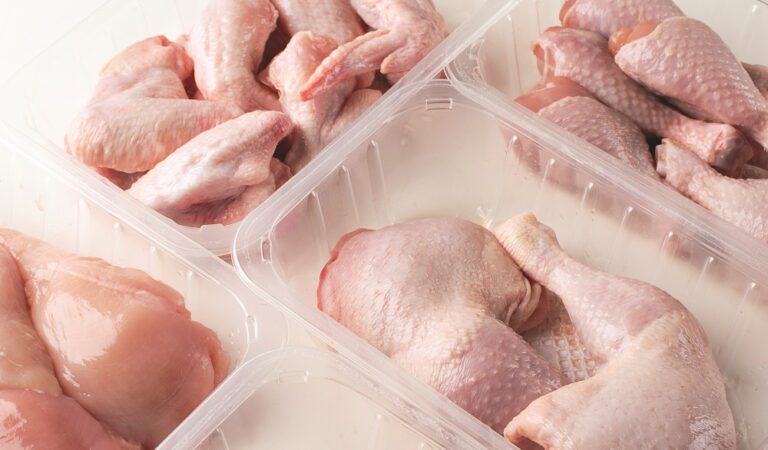
The FSA has published the Year 4 report for the UK retail chicken survey which took place between August 2017 and July 2018. Samples were collected every quarter but after the first quarter only minor retailers were tested. The UK’s top nine retailers have carried out their own sampling since September 2017.

The report found that high level campylobacter contamination in UK chickens has decreased considerably, but remains high in smaller retailers, independents and butchers.

Rebecca Sudworth, Director of Policy at the Food Standards Agency, said: “Retailers have achieved significant reductions in levels of campylobacter contamination since the retail chicken survey began in 2014. The FSA will continue to engage with industry and particularly smaller retailers, butchers and independents to build on this progress.”

During the first months of this 4th survey year chickens (n = 1044) were sampled from all retailer groups, including major retailers, with the large majority (98 %) tested from August to October 2017 (hereafter referred to as the first sampling period). Based on this data, Campylobacter spp. were detected in the majority (56 %) of chicken neck skin samples and 7 % of samples had > 1000 cfu per g chicken skin (highly contaminated chicken category). There were significant differences in the proportion of highly contaminated chickens (ranging from 0 to 21 %) between the different types of retailers that could not be explained by differences in remaining shelf-life, chicken weight, sampling period or the type of rearing used. Comparison of individual approval codes (signifying the slaughter house premises) also showed a significant difference in the proportion of chickens with >1000 cfu per g, ranging from 0 to 27 %, and it was noted that some retailers were predominantly supplied by specific approved slaughter premises. There was no significant difference in the proportion of highly contaminated chickens between smaller or larger chickens. There was no evidence of birds with access to range (e.g. free-range and organic birds) being more contaminated than birds reared under standard conditions, but with much fewer free-range and organic birds tested there was limited precision in the comparisons made. 

Chickens from smaller retail shops were tested for an entire year, from August 2017 to July 2018 (n = 829). Campylobacter spp. were detected in 75 % of these chicken skin samples obtained from non-major retailer shops, and 15 % of samples had counts above 1000 cfu per g chicken skin. Comparison of individual approval codes showed a significant difference in the proportion of chickens with >1000 cfu per g, ranging from 0 to 24 %. The proportion of samples with > 1000 cfu/g of Campylobacter spp. was not significantly different over the different sampling periods for these samples collected from an entire year from the smaller retail shops. There was no significant difference in the proportion of highly contaminated chickens between smaller or larger chickens nor was there any evidence that birds with access to range (e.g. free-range and organic birds) were more contaminated than birds reared under standard conditions.

Taking into account all samples tested during the 4th survey year, C. jejuni alone was isolated from the majority (78 %) of chicken skin samples from which isolates were submitted for speciation (n = 1024). Campylobacter coli alone was identified in 16 % of samples. Both species were found in 6 % of samples. C coli was more frequently isolated from birds with access to range in comparison to those reared as standard birds.

In the samples tested from non-major retail shops, from the entire year (from August to July 2018), C. jejuni was slightly less prevalent during the summer period compared to the rest of the year but this difference was not statistically significant. 

Share. Facebook Twitter LinkedIn Email
Previous ArticleFarm Safety: Why are children still dying on farms?
Next Article Cobb promotes team members as part of business growth plans
Chloe Ryan

Editor of Poultry Business, Chloe has spent the past decade writing about the food industry from farming, through manufacturing, retail and foodservice. When not working, dog walking and reading biographies are her favourite hobbies.

Read Similar Stories

Health & Welfare

Focus on water, humans and rodents when managing avian influenza risk this winter

January 15, 20264 Mins Read
Health & Welfare

Government confirms January consultation on ending laying hen cages

January 8, 20261 Min Read
Health & Welfare

Bird flu cases across UK reach 81 as new outbreak confirmed in England

January 5, 20262 Mins Read
Latest News

Comment: Farmers know what to do, get out of our way

January 16, 2026

Focus on water, humans and rodents when managing avian influenza risk this winter

January 15, 2026

Comment: A modern day ‘pen and sword’

January 15, 2026
Sponsored Content

Stay one step ahead of outbreaks

December 3, 2025

Can Aviance improve production and shell quality in full laying cycle?

October 1, 2025
© 2024 MA Agriculture Ltd, a Mark Allen Group company

Privacy Policy | Cookies Policy | Terms & Conditions

  • Farmers Weekly
  • AA Farmer
  • Farm Contractor
  • Pig World

Type above and press Enter to search. Press Esc to cancel.