

As frontline defenders of bird health, vets have a vital role to play in the success of the industry. Michael Barker hears the latest from the sector
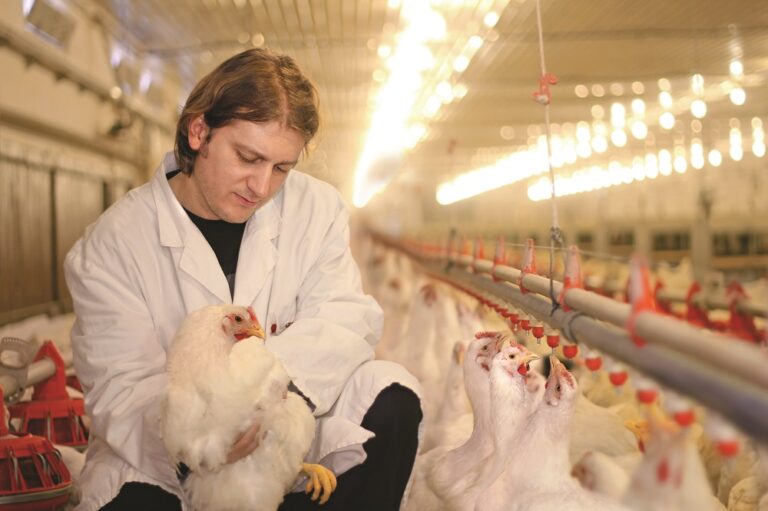
Vets are, in many ways, the unsung heroes of modern poultry production. Their role extends across everything from ensuring birds have the right nutritional package to live a healthy life, to being first responders when a major disease outbreak strikes. In short, they are critical to the smooth and successful operation of the UK egg and poultry industry.
From the frontline, they are in the perfect position to take the temperature of the current state of the health of the UK poultry flock, and are often the first to trial new technologies, supplements and other innovations to aid producers.
Stephen Lister is an independent poultry veterinarian, and he says that among the biggest issues he is seeing on poultry farms right now are Inclusion Body Hepatitis (IBH) in broilers and Blackhead in turkeys, alongside of course avian influenza – or the risk of AI introduction – in all species. He is optimistic, however, that poultry welfare on farm across the industry is continuing to improve and is helping to protect bird health and resistance to a range of disease challenges. Effective, practical farm-level training and experience in welfare outcome assessments for producers will continue these improvements, he insists.
Dr Tom Dutton, a technical consultant for poultry at Elanco UK, highlights AI as the greatest challenge affecting the industry, stressing that outbreaks are affecting vets’ ability to get on farms, help assess bird health and provide advice to producers. “We are finding workarounds where possible, allowing us to continue collecting valuable Health Tracking System (HTSi) data,” he explains. “When assessing gastrointestinal health, cellular sloughing, excessive intestinal mucus and watery intestinal content remain the most prevalent findings on farm throughout 2025. However, the average Intestinal Integrity (I2) score for UK broilers has remained stable and is the highest score for the past five years.”
The battle against AI
Avian flu continues to be the biggest single challenge facing producers, but Lister notes that work continues to learn about actual methods of introduction of the virus into flocks, as well as the use of structural biosecurity of poultry housing, strict barrier hygiene at entry into houses, and ‘bird-only’ restricted areas. He does warn, however, that there is some risk of biosecurity advice “fatigue”.
In terms of new tech, he points to better diagnostics, effective vaccines and the potential for genetic solutions in disease resistance. “There is a need for rapid, reliable, robust testing of flocks to confirm presence of field virus in clinical outbreaks and to demonstrate to producers, government and third countries that vaccinated flocks are free from field virus,” he adds.
Lister says he has a mixed view on vaccination against AI, ideally preferring an approach of rapid identification, depopulation and clean up. However, he admits his view has had to change in terms of the weight of viral challenge flocks have experienced since 2022 via wild bird contamination. “I now feel we must consider opting for vaccination as with other significant diseases, but this needs a national, European and global acceptance of what this means to ensure effective trade in poultry and poultry products can safely continue,” he explains.
Taking stock
The work of vets comes at a time when supermarkets are upping their poultry welfare standards and moving to lower stocking densities. Over the past year to 18 months, retailers have taken turns to come out and proclaim their new health credentials, with the industry having to react quickly to meet the new demands. That has inevitably meant great interest in analysing bird performance within the new structure.
Dutton describes 2025 as “a year of multifactorial change in the UK poultry industry”, adding that Elanco’s HTSi data suggests bird health and performance has been strong across the industry, with no significant changes in coccidia peaks compared to 2024. “Changes in stocking density likely contributes to this, but further data is needed over multiple growing cycles to get a full picture of how it is affecting bird health,” Dutton says.
Lister says that although it is early days to truly assess the impact of the move to lower stocking densities, initial findings suggest that flocks are easier to manage with better litter control, improved bird and carcase quality, and general health improvements.
Gut instincts
Gut health and biome management has become one of the key focus areas both for vets and nutrition providers in recent years, and that trend is expected to continue apace as animal health experts learn more about the importance of a balanced, stable gut flora. This focus has resulted in better performance and significantly reduced antibiotic use, Lister notes, and he believes there is still further progress to be made, with microbiological technology and balanced breeding programmes all set to help.
Dutton stresses that having a healthy microbiome is vital to provide birds inherent disease resistance, inhibit pathogenic bacterial colonisation, outcompete pathogenic bacteria and reduce the need for antibiotics. Probiotics can alter microbiome composition, he notes, promoting intestinal integrity and positively affecting performance.
He cites the Bacillus strains in GalliPro Fit as an example of how it’s possible to successfully compete against undesirable bacterial species, without the need for antibiotics. “With technologies such as whole-gene sequencing becoming more readily available and affordable, our understanding of the microbiome is improving all the time,” he adds. “This information is helping optimise bird microbiome for health, welfare and performance.”
Elanco puts a great deal of resource into providing a portfolio of solutions to help optimise gut health, Dutton points out. This encompasses coccidia control through Maxiban and Monteban, probiotics (GalliPro Fit) and enzymes (Hemicell XT). That’s in addition to HTSi having provided health monitoring of flocks and data for the past 30 years, to ensure performance is benchmarked – with the HTSi Poultry Portal enabling real-time data and predictive analytics so opportunities for improvements are identified. “By looking at multifactorial solutions, bird health, welfare and performance can be improved,” he notes.
Over the years, St David’s Poultry Team veterinary service has evolved from individual animal care to flock management, and now to the total farm microbiome and its proactive management. By understanding and managing its correct development, vets can better support both animal health and productivity.
With today’s commercial poultry becoming more efficient all the time, microbiome management is more crucial than ever. Part of this management will take the form of a more integrated approach to farm health, along with the use of new management techniques and interventions that become available.
St David’s Poultry Team says: “In 2025, we saw how our innovative approaches are contributing to a sustainable and profitable industry for the long term. Broiler health and welfare have improved considerably, and our clients have achieved some record-breaking crops.
“On the layer side, we have supported an increasing number of farms to extend their birds’ productive lives, enabling flocks to produce eggs of the right size and quality for longer.”
What’s next?
The pace of innovation in poultry health has rarely been so fast, taking into account the impact of artificial intelligence in flock monitoring, new and alternative feeds and medicines, and the emergence of rapid diagnostic tests for a range of diseases. In terms of specific challenges, Lister says there still remains a need for effective treatment and prevention for conditions such as Blackhead in turkeys.
The industry is proving itself adept at finding solutions as problems emerge, and it will no doubt continue to work hand in hand with nature and technology to bring even further efficiencies and animal health benefits in the years ahead.
WOAH calls for co-ordinated AI approach
With highly pathogenic avian influenza H5 viruses causing increased disruption and mortality in wildlife across the world, the World Organisation for Animal Health (WOAH) has called for coordinated wildlife surveillance, rapid genomic characterisation of viruses, improved data sharing, integration of broader conservation actions, and the tackling of other conservation threats such as habitat loss, overfishing, invasive species, pollution, and climate change.
Speaking just before Christmas, the organisation said that innovative approaches such as nature-based solutions that strengthen ecological resilience and maintain the natural barriers that limit pathogen spill-over should be actively explored.
Examples of these solutions include supporting natural scavenger populations to enhance biological removal of infected carcasses, restoring and protecting wetlands and coastal habitats to reduce crowding of migratory birds, maintaining heterogeneous freshwater–coastal landscapes that disperse foraging and roosting densities, and minimising artificial congregation points that can serve as viral hot spots.