


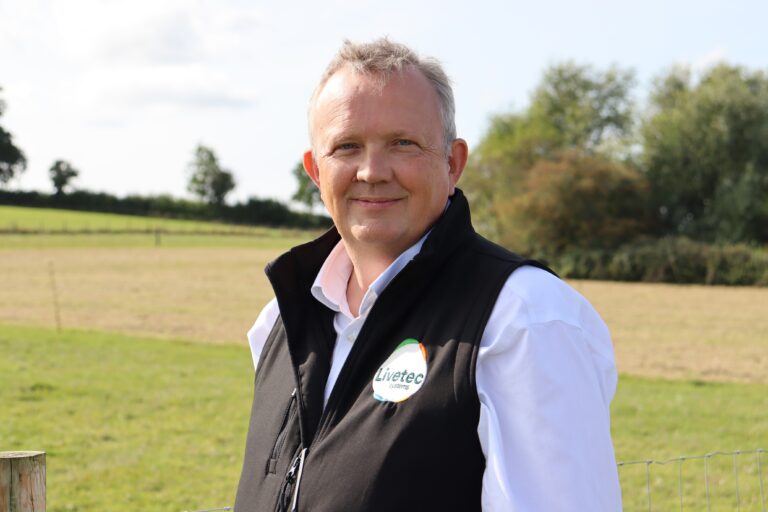
By Julian Sparrey, technical director at Livetec Systems
Winter creates conditions that favour avian influenza (AI), shaped by weather patterns, wild bird movements and an environment where infection pressure rarely disappears.
As a result, the question is no longer if cases will rise, but how prepared the industry is when they do.
There’s already significant AI virus circulating beyond the perimeter fence. For many producers, it’s not a distant risk moving across the country; it’s present in the fields, waterways and wildlife around their units.
Therefore, the critical challenge is not what is happening beyond the gate, it’s what happens at the shed door.
That means assuming exposure is inevitable and doing everything possible to prevent virus entry via people, water, equipment and vermin.
Biosecurity is no longer reactionary; it is the defining factor in business resilience.
Water risk
Periods of heavy rainfall consistently expose poultry housing to water ingress – one of the most underestimated risks in avian influenza control.
Experience shows that within days of significant rainfall there is often an uptick in AI cases, because water provides an efficient route for the pathogen to enter poultry houses.
The AI virus can persist in water for around 100 days, and it only takes a small volume entering a shed – whether via overflowing gutters, poor drainage or inadequately sealed doors – to initiate infection.
Following storms or prolonged wet weather, I urge producers to treat any damp patch inside a building as a biosecurity warning sign.
Where water-related issues cannot be addressed immediately, they should be logged and prioritised for repair during drier conditions. Recording the location with photographs and tools such as what3words can help ensure problems are accurately identified, particularly when defects are no longer visible once the unit dries out.
Human risk
Water is not the only route for AI into poultry housing. People can just as easily carry infected water, mud or muck into sheds on boots, clothing and equipment.
That is why clear, enforced physical separation between outdoor and indoor footwear and overalls is essential.
All units should operate strict barrier system procedures that create a defined break between the outdoor environment and internal space occupied by birds. Outdoor footwear and overalls should never enter the same area as indoor boots, and bench barriers are critical in enforcing that separation, not just planks of wood.
In practice, washing boots before any disinfection, combined with a properly enforced barrier system, is far more effective than relying on disinfectant alone. Getting this right at the shed door remains one of the simplest – and most important – biosecurity controls available.
Rodent risk
Rodents are likely to play a significant role in the transmission of AI to poultry flocks, particularly during colder months when they are drawn into buildings in search of food, warmth and shelter.
They carry the disease on their bodies and, if they move through infected bird faeces, they bring it into sheds.
Their presence is often underestimated. During whole-house gassing following AI outbreaks, it is common to find far more mice and rats inside sheds than producers expect, even where there were few visible signs beforehand.
Because rodent activity is largely nocturnal, I would encourage producers to use wildlife cameras inside sheds, particularly near manure belts or known access points, to understand what is happening when no one is on site.
That visibility allows targeted action. Simply placing bait is rarely sufficient; effective control depends on preventing access in the first place.
Covering all potential entry points with fine-gauge mesh, around 5mm, is recommended to stop rats and mice gaining entry.
Planning for the future
Managing the immediate risks of AI is essential, but long-term resilience depends on preparation. Developing a clear contingency plan during lower-risk periods ensures businesses know exactly how to respond if an outbreak occurs.
Specialist support can play a valuable role, from conducting comprehensive biosecurity risk assessments to putting practical plans in place that meet Defra and APHA requirements in the event of an outbreak.
Investment in staff training is equally critical. Ensuring everyone on site understands the importance of biosecurity, and how to identify and report risks. This strengthens the entire system and reduces the likelihood of a single weak link undermining the business.